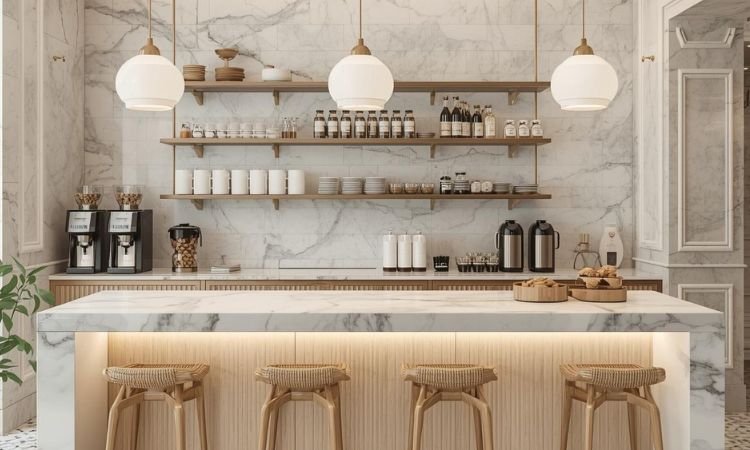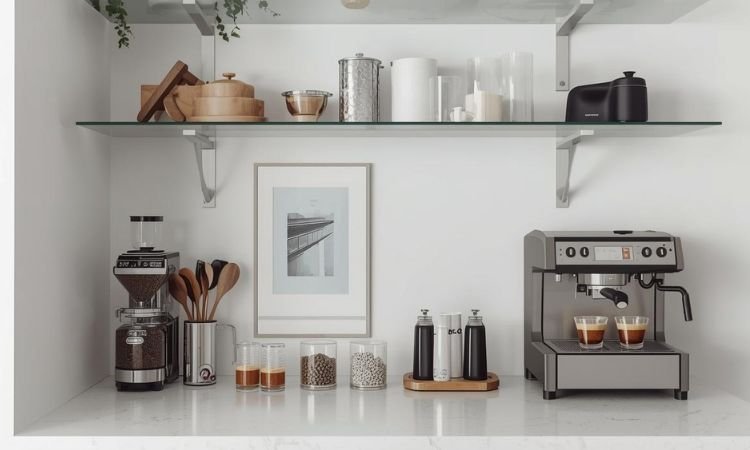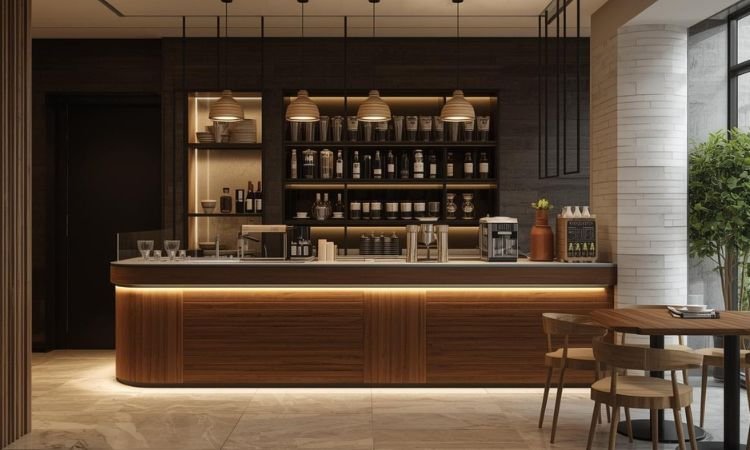
A coffee bar at home can simplify your morning and keep your kitchen organized. This guide covers 11 modern coffee bar ideas—including built-in cabinetry, compact carts, smart storage, and appliance integration—that work in small spaces and fit clean, contemporary design.
You don’t need a full café setup. With the right layout and a few thoughtful choices, you can create a practical station that looks good and works every day.
Why a Coffee Bar Makes Sense
Saves time: Keep your machine, mugs, beans, and tools in one spot so you’re not searching cabinets each morning.
Reduces clutter: Move daily coffee items off main counters and into a dedicated zone.
Fits tight spaces: A coffee bar can live in a corner, on a shelf, or inside a cabinet—no extra square footage needed.
Looks intentional: A well-organized setup adds polish to your kitchen or dining area without major renovation.
11 Modern Coffee Bar Ideas for a Sleek, Functional Home Setup
These setups focus on function, clean lines, and everyday use—not just looks.
1. Integrated Appliance Cabinet
Install your espresso machine and electric kettle inside a custom cabinet with a lift-up or sliding door. Run power through a hidden outlet in the back panel. This keeps cords out of sight and surfaces clear.
Use flat-panel doors in matte white, black, or natural wood. Add a pull-out tray below for beans, filters, and cleaning supplies. Everything stays accessible but disappears when not in use.
2. Floating Shelf Station
Mount a single deep shelf (12–16 inches) on an empty wall near an outlet. Place your coffee maker, gooseneck kettle, and airtight containers in a straight line. Keep only what you use daily—store extras elsewhere.
Choose a shelf in matching wood or painted MDF. Use matching mugs and canisters to keep the look tidy. This works well in apartments or open-plan kitchens.
3. Pull-Out Drawer Unit
Convert a standard base cabinet into a slide-out coffee drawer. Use adjustable dividers to hold mugs upright, store syrups in bins, and keep pods or grounds in labeled containers. The whole setup slides back under the counter when done.
Line the drawer with rubber matting to prevent sliding. Include a small cutout in the back for cord management if you keep a grinder inside.
4. Slim Utility Cart
Use a narrow metal or wood cart (18–24 inches wide) on casters. Assign each shelf: top for brewing, middle for glassware, bottom for backup supplies. Lock the wheels when parked.
Pick a cart with open sides so it doesn’t feel bulky. Stick to neutral colors or match your kitchen hardware. This option works in hallways, dining rooms, or beside a fridge.
5. Recessed Nook with Open Shelves
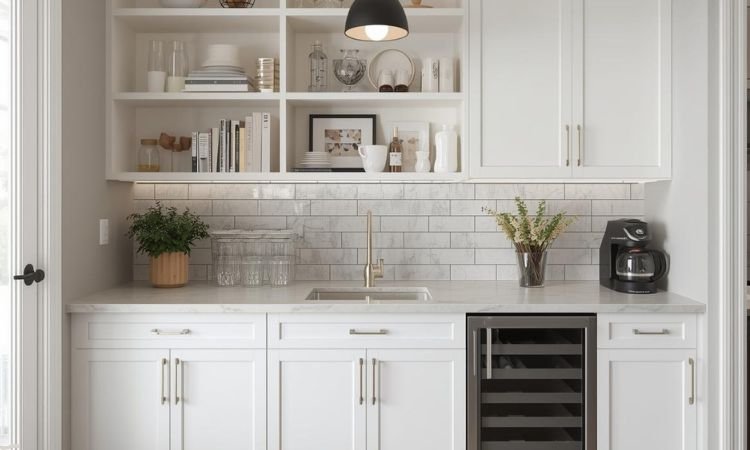
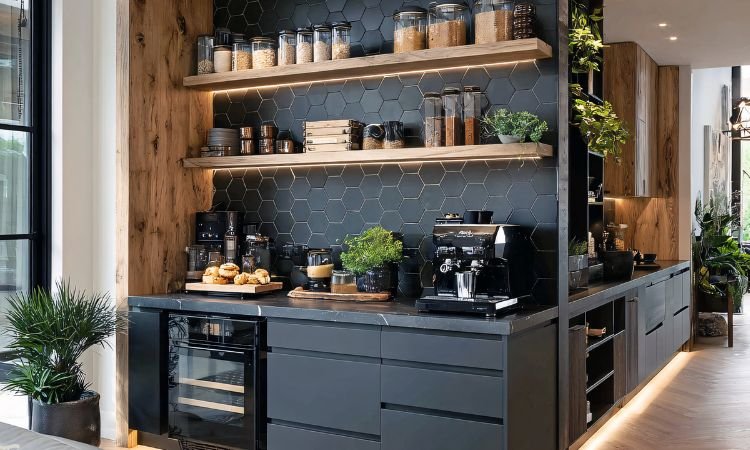
If you have space between cabinets or beside a pantry, build a shallow recess (6–8 inches deep). Add two or three floating shelves to hold your machine, favorite mugs, and a small plant.
Tile the back wall or paint it a contrasting color to define the zone. Add a small LED strip under the top shelf for early mornings.
6. Built-In Beverage Center
Include a 15-inch undercounter refrigerator for milk, cold brew, or sparkling water. Pair it with a built-in espresso machine and overhead cabinet for cups. This mimics commercial setups but fits residential kitchens.
Choose panel-ready appliances so they blend with cabinetry. Add a small backsplash in stone or tile for easy cleanup behind the machine.
7. Wall-Mounted Pegboard
Mount a steel pegboard above a counter or console. Hang mugs on hooks, store tampers and scoops in small bins, and clip a digital scale to the side. This keeps tools visible but off the counter.
Paint the wall behind in a solid color—navy, olive, or warm gray—to make the setup stand out without looking messy. Keep the layout simple: no more than six items.
8. Glass-Front Cabinet
Replace solid cabinet doors with clear or smoked glass. Display your best-looking gear: ceramic grinders, copper kettles, glass carafes. Install a small LED light inside to highlight the contents.
Limit what’s shown to five or six items. Store everyday backups in a separate drawer so the display stays clean.
9. Corner Coffee Zone
Use an unused corner for a compact coffee station. Install L-shaped shelves or a small countertop that fits the angle. Face the setup toward a window or open space so it doesn’t feel closed in.
Add a slim stool or standing mat if you spend time here. Use vertical space for a wall-mounted timer or small herb garden.
10. Smart Appliance Setup
Use a Wi-Fi-enabled coffee maker you can start from your phone. Add a wireless charging pad on the counter for your phone and under-cabinet lighting on a motion sensor.
Keep tech minimal. Hide routers or hubs in a nearby drawer. The goal is convenience, not complexity.
11. Simple Material Mix
Combine two or three materials: walnut shelves, matte black fixtures, white ceramic canisters. Avoid too many finishes—stick to a consistent palette.
Use heat-resistant surfaces near machines. Choose wipeable materials for areas that get splashed or steamed.
Common Mistakes and Fixes
Too many gadgets out at once
Fix: Only keep what you use daily. Store specialty items like French presses or cold brew kits in a separate cabinet.
Poor workflow
Fix: Arrange in order: beans → grind → brew → serve. Minimize steps between each stage.
No ventilation around machines
Fix: Leave at least 2 inches of space on all sides of espresso machines to prevent overheating.
Mismatched accessories
Fix: Use the same finish for all metal parts—brushed nickel, black, or brass—and stick to one or two mug styles.
Frequently Asked Questions
How much space do I need?
As little as 12 inches wide. A single shelf or narrow drawer can hold the basics. For a full setup, 24–36 inches of linear space works well.
Do I need a sink?
Not unless you already have plumbing nearby. Most people rinse portafilters or drippers in the main sink. A small pitcher of hot water works for quick cleanups.
What countertop material works best?
Quartz, stainless steel, or sealed concrete handle heat and moisture well. Avoid unsealed wood or porous stone directly under steam wands.
Can I put a coffee bar outside the kitchen?
Yes—use a console table in a hallway, a cart in a dining room, or a shelf in a home office. Just make sure there’s an outlet nearby and enough clearance to move around.
A Practical Daily Setup
A good coffee bar isn’t about looking like a café—it’s about making your routine easier and keeping your space neat. Focus on what you actually use, place it where it’s convenient, and skip anything that adds clutter.
Which of these 11 setups fits your space? Try one and see how it changes your morning.