Your open floor plan probably seemed amazing when you moved in—all that light and spaciousness—but now you’re struggling with noise traveling everywhere, nowhere to hide clutter, and that awkward feeling of your living room bleeding into dining areas or home offices without any sense of defined purpose leaving you wondering how to create separation without losing the openness that attracted you in the first place.
Living room partition design requires balancing spatial definition with visual openness—understanding which partition styles create necessary separation without blocking light or creating claustrophobic boxed-in feelings, where solid versus transparent options serve different functional needs, how height and placement affect both privacy and flow, and making strategic choices that solve real problems while maintaining the airy connected atmosphere modern living demands.
We’re covering living room partition design ideas featuring diverse materials, styles, and functional approaches. You’ll discover which options suit different needs, common mistakes destroying openness, and where to invest limited budgets. We’re exploring permanent and temporary solutions, decorative and functional designs, and multi-purpose options. Plus installation considerations, lighting implications, and styling tips creating beautifully defined spaces maintaining visual connection while providing necessary separation.
Why Living Room Partitions Need Special Approaches
Light Flow Determines Success or Failure: Solid floor-to-ceiling walls block natural light creating dark unwelcoming spaces defeating open floor plan benefits. Partition selection must prioritize light transmission while achieving separation goals. Thoughtful design maintains brightness throughout connected spaces.
Visual Weight Affects Spatial Perception: Heavy opaque partitions shrink perceived space while light transparent options maintain expansive feeling despite physical division. Material choice impacts how large or cramped rooms feel. Strategic selection preserves spaciousness while creating definition.
Functional Requirements Vary Dramatically: Some situations require acoustic privacy while others need only visual suggestion of separation—understanding actual needs prevents over-building or under-solving real problems. Purpose drives appropriate design choices. Matching solutions to requirements ensures satisfaction.
Flexibility Offers Long-Term Value: Permanent built-in partitions limit future layout changes while movable options adapt as needs evolve—considering flexibility affects investment decisions and long-term functionality. Adaptable solutions serve changing households. Forward-thinking selection protects investment value.
Living Room Partition Design Ideas
Transform your open space with these living room partition design ideas featuring diverse functional approaches.
Install Open Shelving Room Dividers
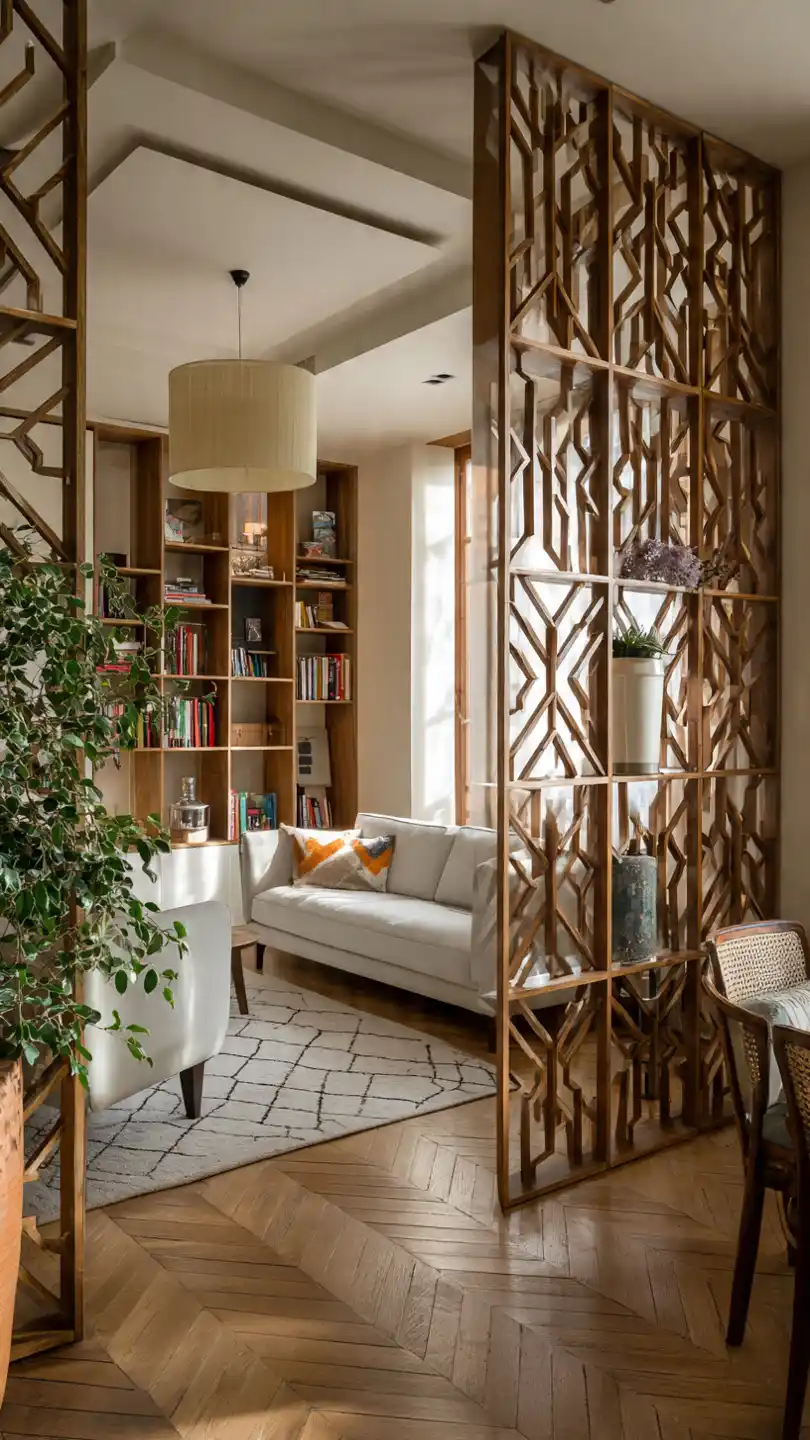
Position freestanding open shelving units creating functional separation while maintaining visual connection through transparent shelf design. Choose bookcases without backs allowing light passage and sightlines through the structure while providing valuable storage and display space. Select heights based on desired privacy level—counter height for subtle definition, full height for significant separation.
Quality room divider shelving costs $200-800 depending on size, material, and construction quality delivering dual-purpose functionality. The open design prevents light blockage while creating genuine spatial definition through physical presence. Style shelves with mix of books, plants, and decorative objects adding visual interest from both sides. The practical approach solves storage needs while defining spaces without sacrificing openness.
Create Glass Panel Partitions
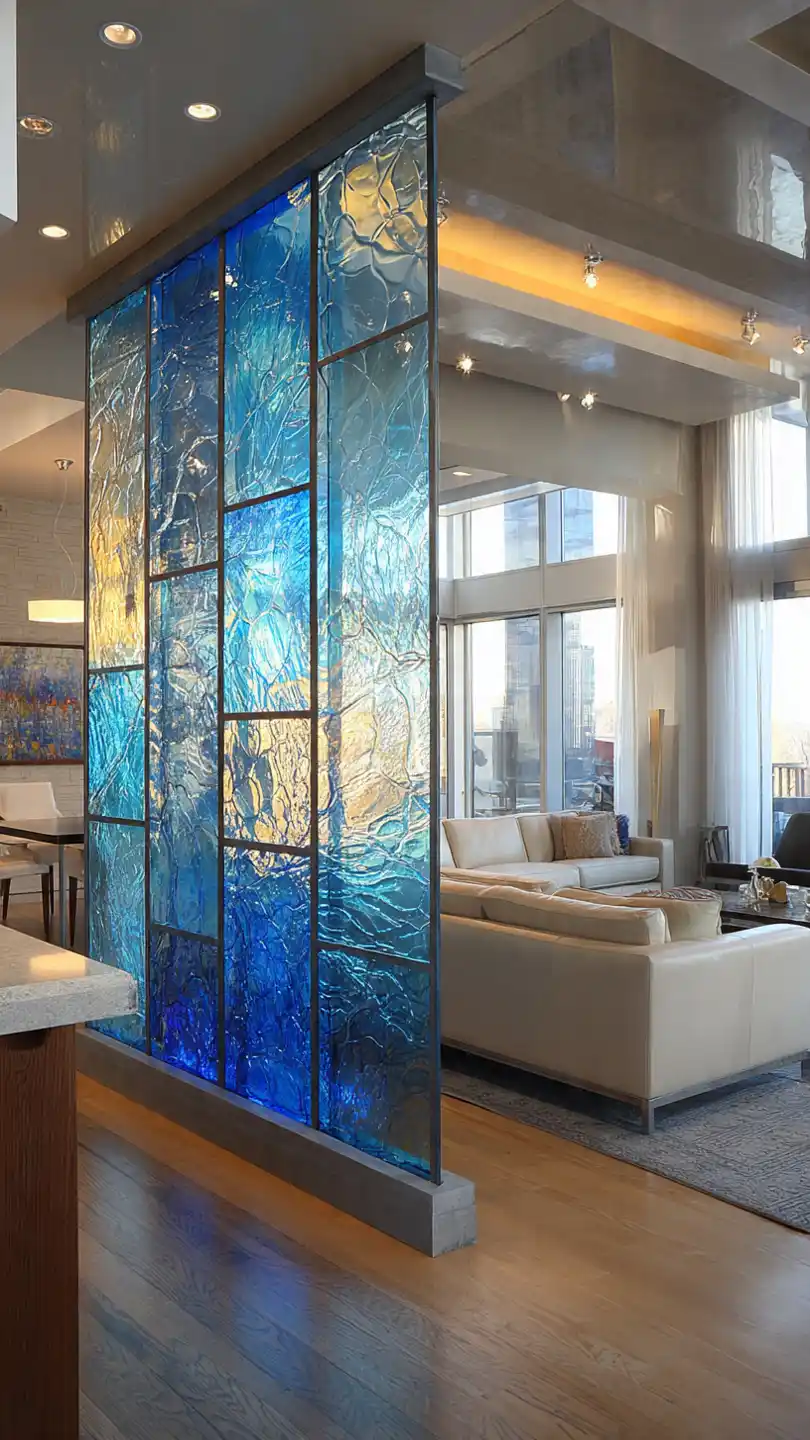
Install glass panel systems—framed or frameless, clear or frosted—providing physical separation while maintaining complete visual openness and light transmission. Choose clear glass for maximum connection or frosted options adding privacy while still transmitting light beautifully. Consider steel-framed industrial styles, minimalist frameless designs, or traditional mullioned patterns matching home aesthetic.
Glass partition systems cost $150-500 per linear foot installed depending on complexity and frame style creating sophisticated modern separation. The transparent barrier blocks sound and creates defined zones while preserving open floor plan benefits completely. Frosted sections at strategic heights provide privacy where needed while clear portions maintain connection. The elegant solution suits contemporary, industrial, and transitional interiors requiring separation without visual sacrifice.
Use Vertical Slat Screens
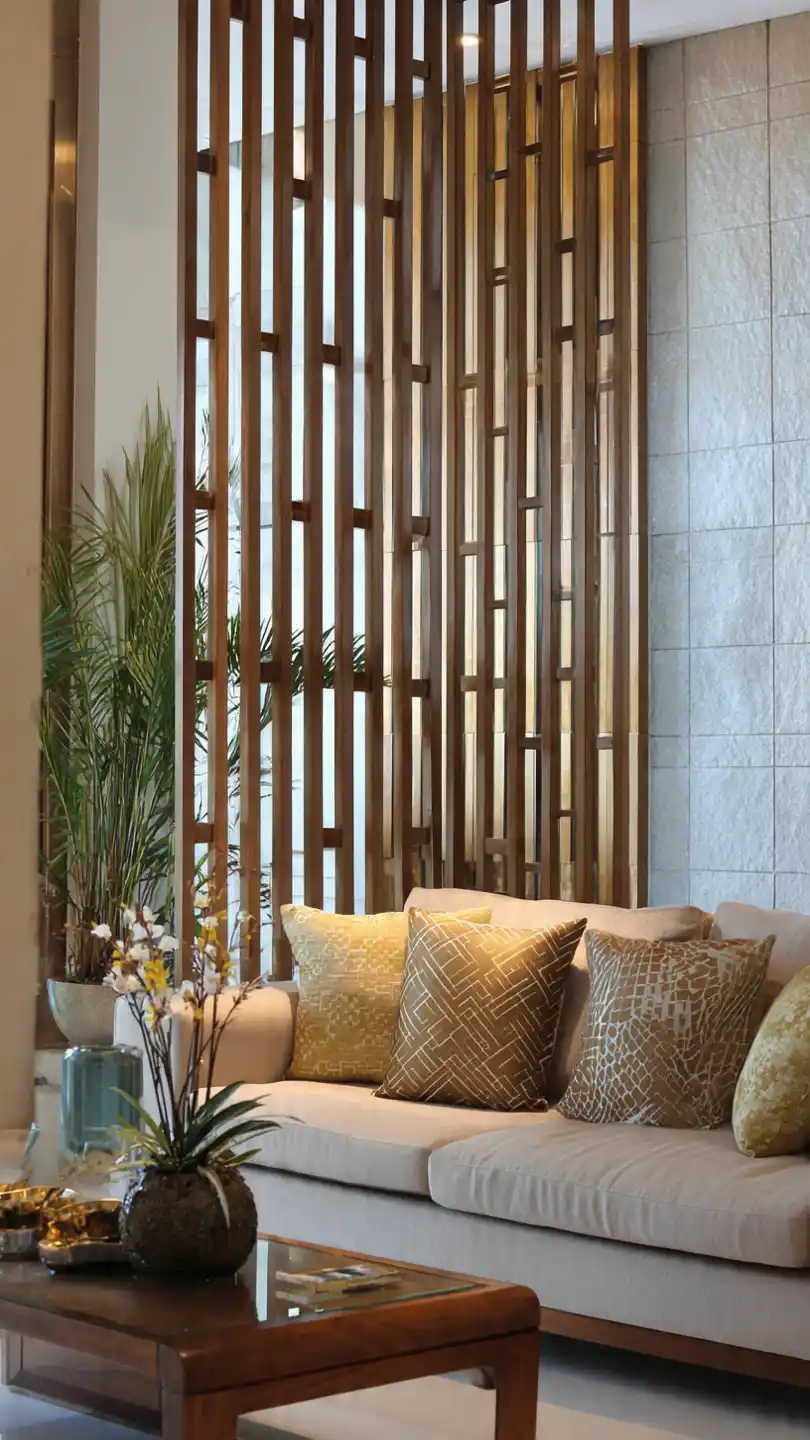
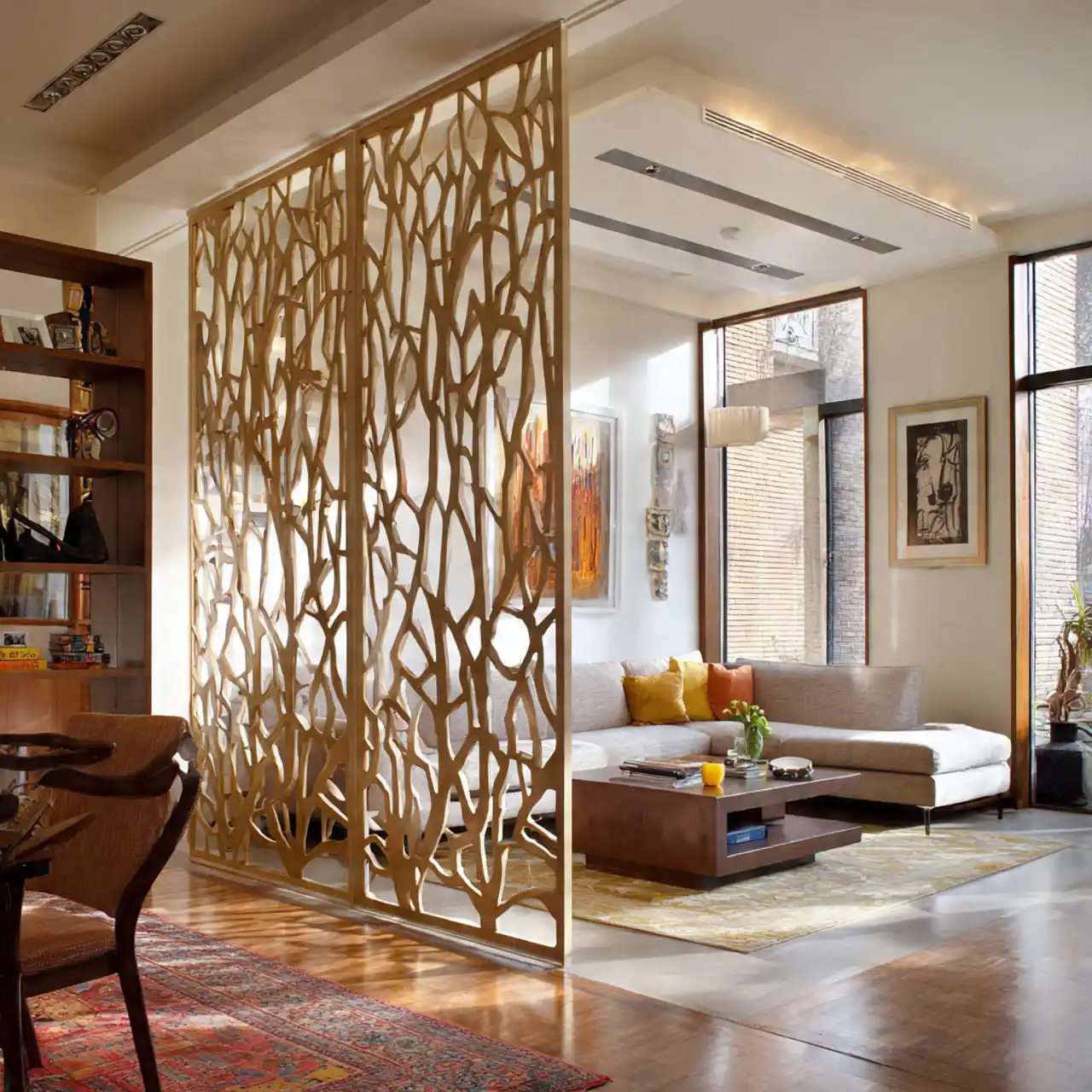
Install vertical wood or metal slat dividers creating rhythmic visual separation while allowing light and air to flow between spaces freely. Choose slat spacing based on desired privacy level—wider spacing maintains more openness while tighter spacing increases visual separation. Select wood tones matching existing finishes or painted options complementing color schemes.
Vertical slat partitions cost $300-1,200 depending on materials, height, and width delivering contemporary aesthetic with functional separation. The linear pattern creates modern architectural interest while partial transparency maintains spatial connection. Mount floor-to-ceiling for dramatic impact or partial height for subtle zone definition. The versatile design suits mid-century modern, contemporary, and Scandinavian interiors adding sculptural beauty while serving practical separation needs.
Position Large Plant Arrangements
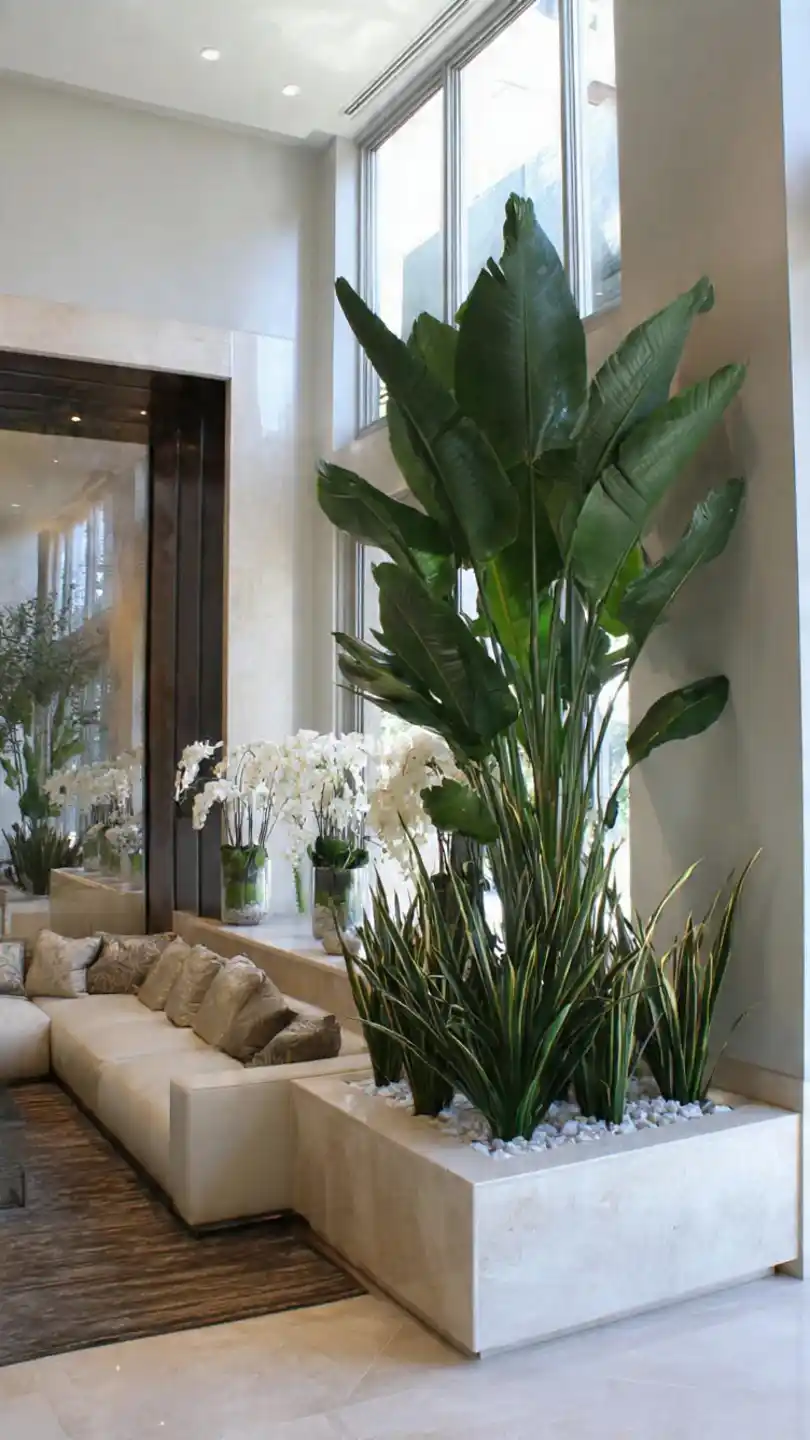
Create living green partitions using tall plants—fiddle leaf figs, birds of paradise, bamboo palms, rubber trees—arranged in rows or clusters defining spaces naturally. Choose dramatic floor plants reaching 5-7 feet creating substantial visual separation while adding life and air-purifying benefits. Combine varied heights and textures creating lush organic screening.
Living plant partitions cost $100-500 depending on plant selection and quantity delivering unique biophilic separation improving air quality and wellbeing. The natural approach suits virtually any interior style while creating genuinely healthy living environments. Consider planter boxes on casters enabling repositioning as needs change. Ensure adequate light for chosen plant varieties or supplement with grow lights maintaining healthy attractive screens. The organic solution creates beautiful separation while bringing nature indoors.
Install Hanging Panel Systems

Suspend decorative panels from ceiling tracks creating flexible separation adjustable based on immediate needs. Choose fabric panels for softness and sound absorption, wood panels for warmth and privacy, or acrylic panels for modern transparency. Install track systems allowing panels to slide open for full connection or closed for complete separation.
Hanging panel systems cost $200-800 depending on materials and track complexity offering maximum flexibility for changing needs. The suspended design keeps floor space completely clear maintaining spacious feeling while providing genuine separation when needed. Layer multiple panels creating varied transparency levels—sheer fabric for gentle filtering, solid for privacy. The adaptable approach serves households with evolving needs for open entertaining versus private quiet zones.
Get updates on the latest posts and more from FowlFamily – DIY Home Decor | Gardening | Landscaping | Homesteading straight to your inbox.
Build Half-Wall Pony Partitions
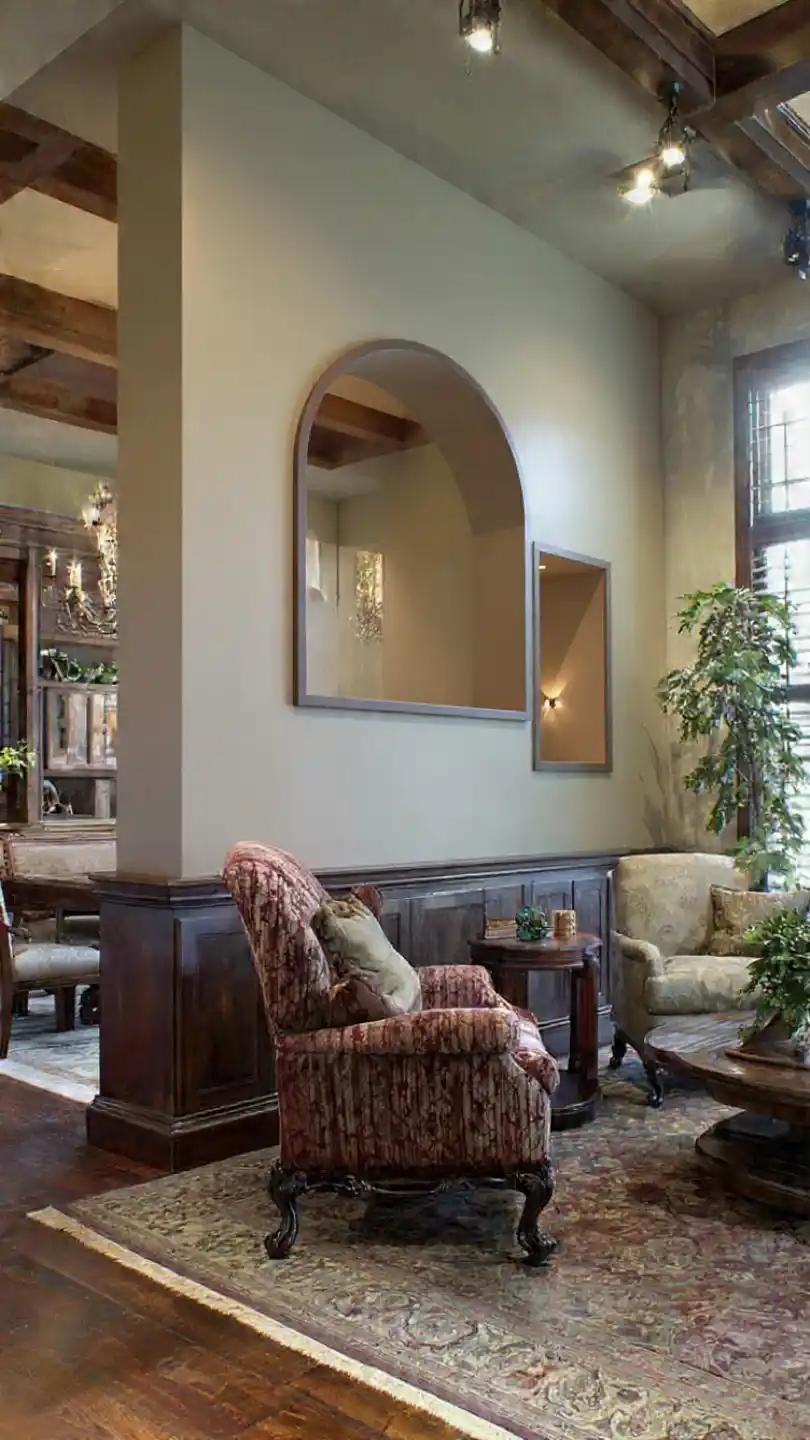
Construct half-height walls—typically 36-48 inches—creating solid separation at lower levels while maintaining visual connection and light flow above. Top with wood caps creating useful ledge surfaces for display or casual dining. Consider incorporating built-in storage, electrical outlets, or display niches adding functionality to structural separation.
Half-wall construction costs $500-2,000 depending on length, finishes, and integrated features creating permanent architectural definition. The partial height blocks sightlines to clutter and creates genuine zone separation while preserving ceiling-level openness and light. Finish to match existing trim and wall treatments integrating seamlessly with room architecture. The traditional approach suits various styles from craftsman to contemporary providing substantial definition without full enclosure.
Choose Folding Screen Dividers

Select decorative folding screens offering instant portable separation requiring no installation or permanent commitment. Choose three to six panel screens in heights from 4-7 feet based on separation needs. Select styles ranging from traditional carved wood to modern geometric patterns to minimalist fabric panels matching interior aesthetic.
Quality folding screens cost $100-600 depending on size, materials, and design quality delivering immediate flexible separation. The portable nature allows repositioning for different occasions—privacy for overnight guests, openness for entertaining, work separation during daytime hours. Fold and store easily when full openness desired. The accessible approach suits renters, frequently rearranging households, and those wanting non-committal separation options testing configurations before permanent solutions.
Create Built-In Bookcase Walls
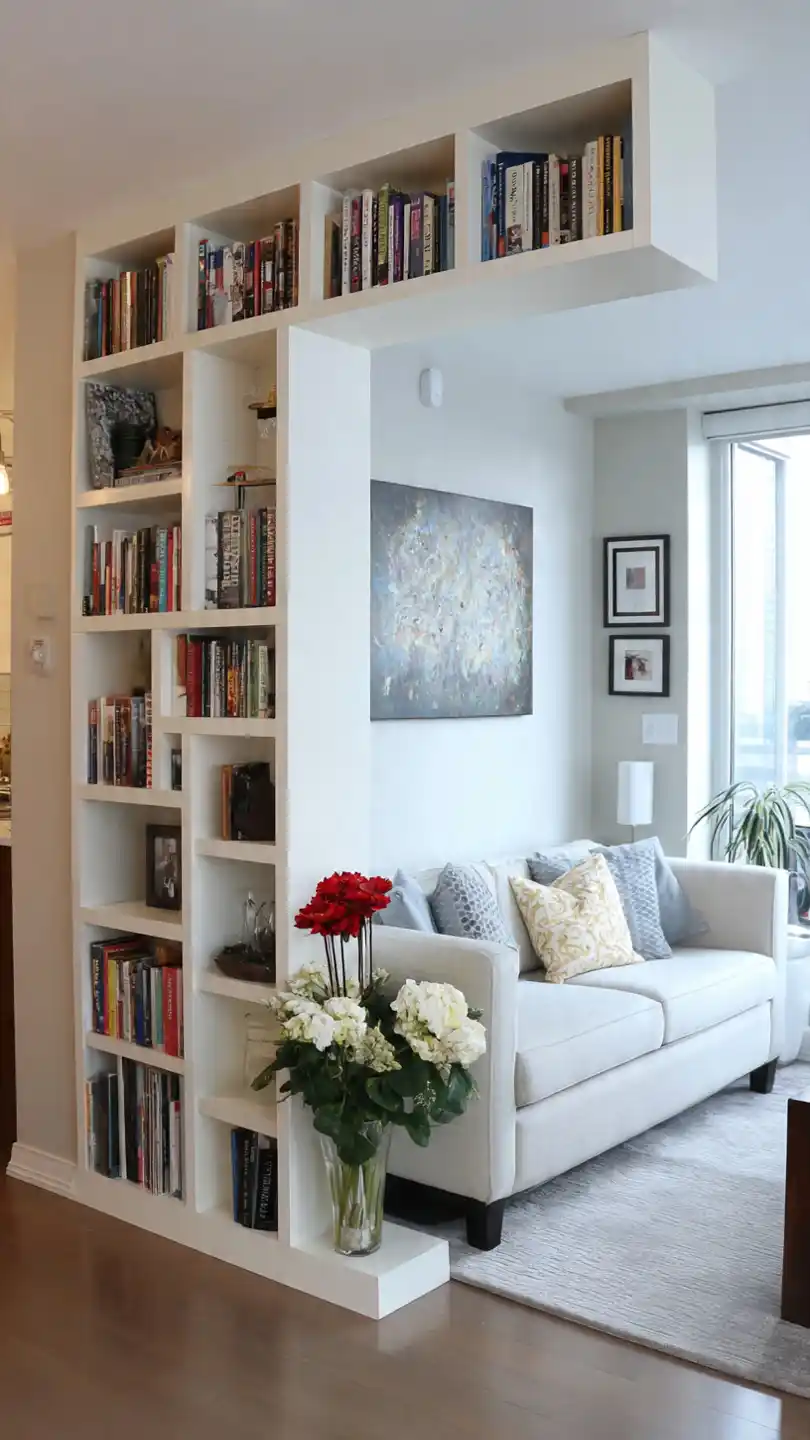
Construct floor-to-ceiling built-in bookcases serving as functional room dividers providing massive storage while creating architectural separation. Design with open sections maintaining visual connection and light passage through strategic placement of see-through areas. Include varied shelf heights, closed cabinet sections, and display niches creating visually interesting functional walls.
Built-in bookcase dividers cost $2,000-8,000 depending on size, complexity, and finish quality creating significant permanent architectural features. The customized approach maximizes storage while solving separation needs through single integrated solution. Design pass-through openings at eye level maintaining connection while closed sections below hide storage. The investment-level approach suits homeowners committed to current floor plans wanting substantial architectural impact with maximum functionality.
Install Beaded or Macramé Curtains

Hang decorative curtains—beaded strands, macramé panels, or chain link designs—creating bohemian artistic separation with flowing movement and visual interest. Choose materials and colors complementing interior style from natural wood beads to metallic chains to hand-knotted rope. Install on ceiling tracks or tension rods enabling easy adjustment and removal.
Decorative hanging curtains cost $50-300 depending on materials and size offering budget-friendly artistic separation with unique character. The flowing elements create gentle suggestion of separation while allowing easy passage through without door operation. Movement and sound add sensory interest distinguishing these partitions from static alternatives. The bohemian approach suits eclectic, artistic, and relaxed interiors adding personality while softly defining zones.
Design Fireplace Feature Walls
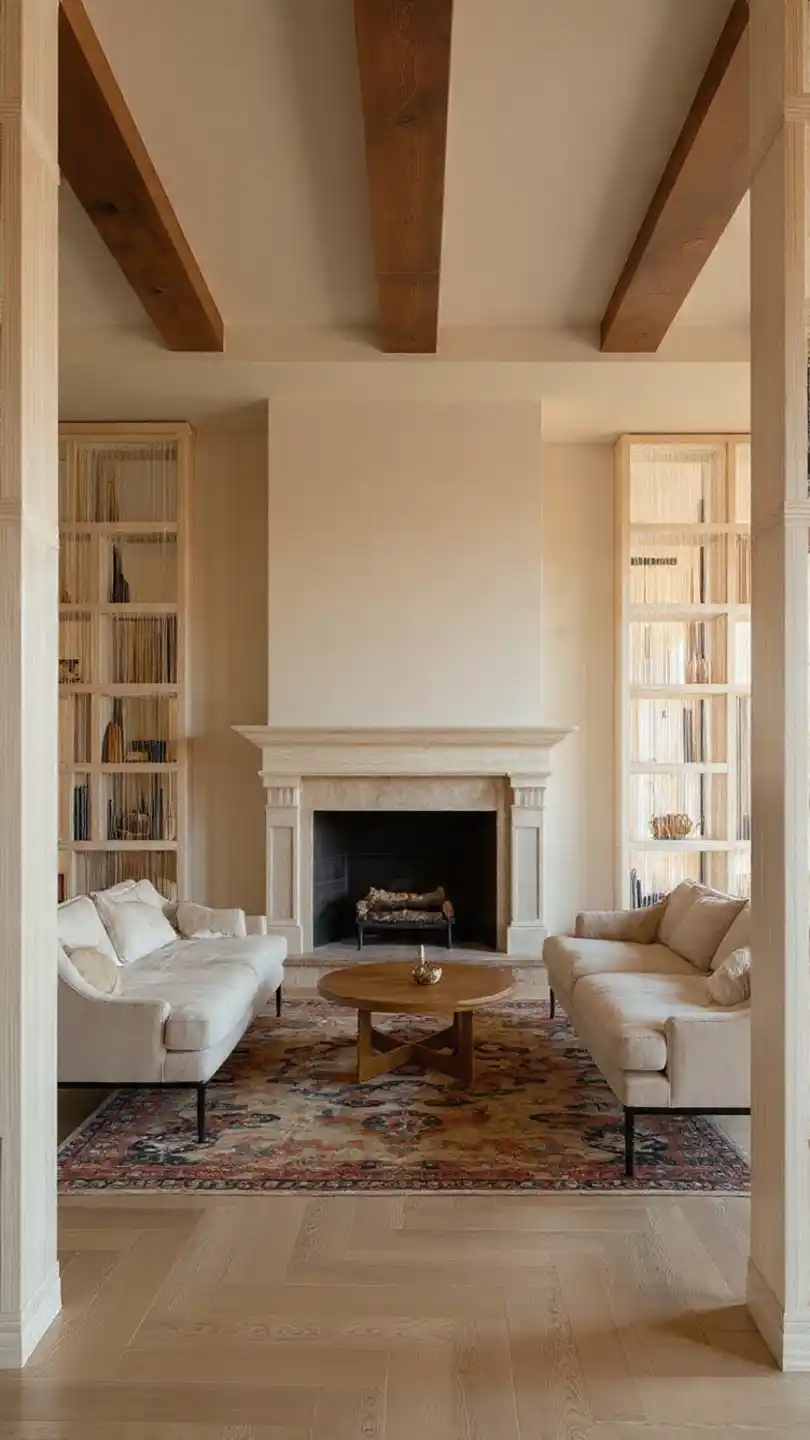
Position double-sided fireplaces or fireplace feature walls creating dramatic architectural separation visible and functional from both spaces. Choose modern linear gas fireplaces, traditional masonry designs, or electric alternatives based on budget and installation feasibility. Extend surrounding materials—stone, tile, wood—creating substantial visual anchor defining adjacent zones.
Fireplace partition walls cost $3,000-15,000+ depending on fireplace type, size, and surrounding finish materials creating significant architectural statements. The dramatic approach transforms necessary separation into stunning focal feature serving both spaces beautifully. Gas and electric options offer installation flexibility without chimney requirements. The investment creates permanent valuable architectural enhancement adding both beauty and function to open floor plans.
Use Curtain and Drape Dividers
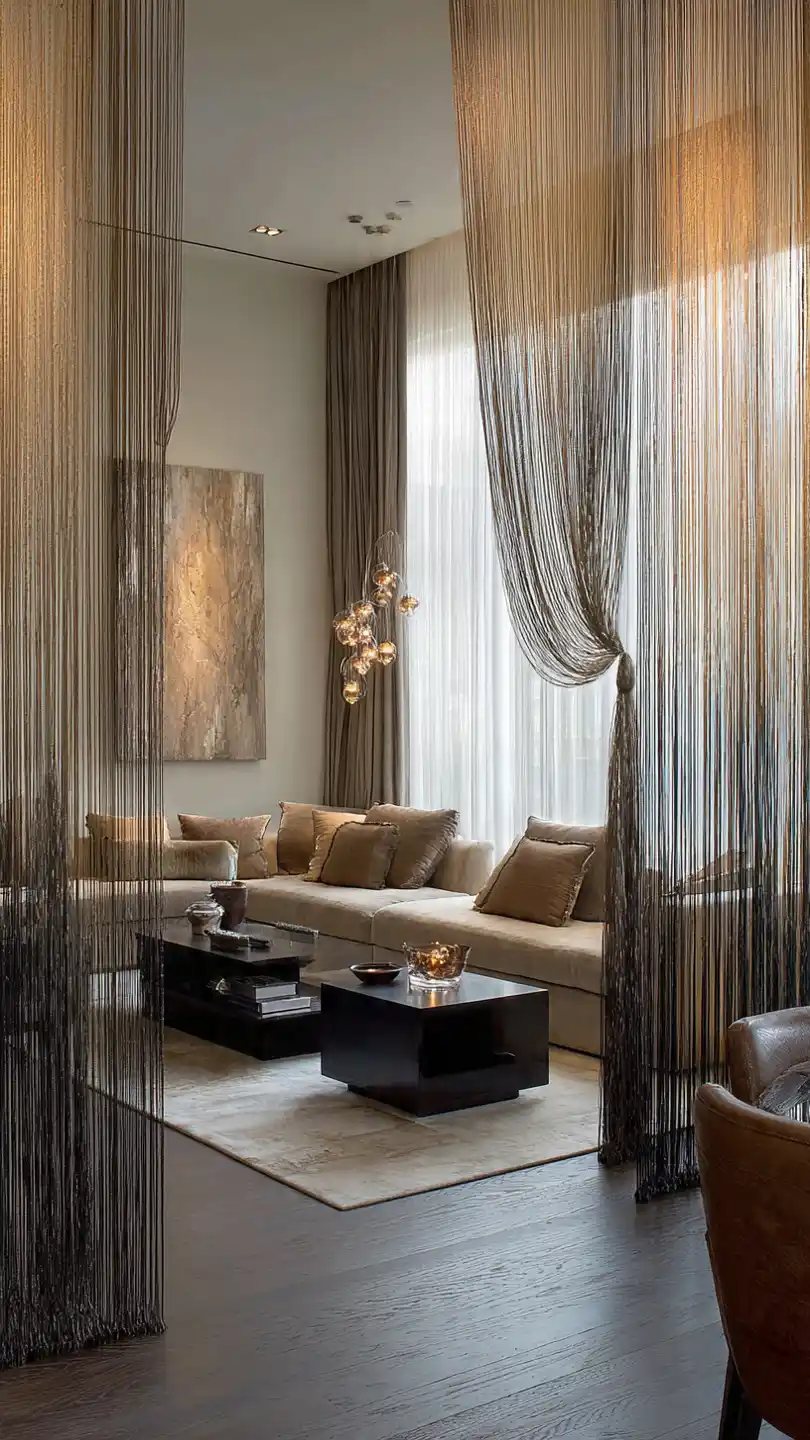
Install ceiling-mounted curtain tracks with flowing fabric panels creating soft elegant separation easily opened or closed as needed. Choose sheer fabrics for gentle light-filtering separation or heavier drapes for complete visual privacy and improved acoustics. Select colors and textures complementing existing soft furnishings creating cohesive interior design.
Curtain partition systems cost $100-400 including track hardware and fabric delivering soft flexible separation with easy installation. The fabric approach adds warmth and acoustic absorption reducing noise transmission between zones effectively. Draw curtains closed for privacy or open completely for full connection within seconds. The versatile solution suits bedrooms divided from living areas, home offices requiring occasional privacy, and flexible entertaining spaces needing quick transformation capability.
Create Metal Grid Partitions
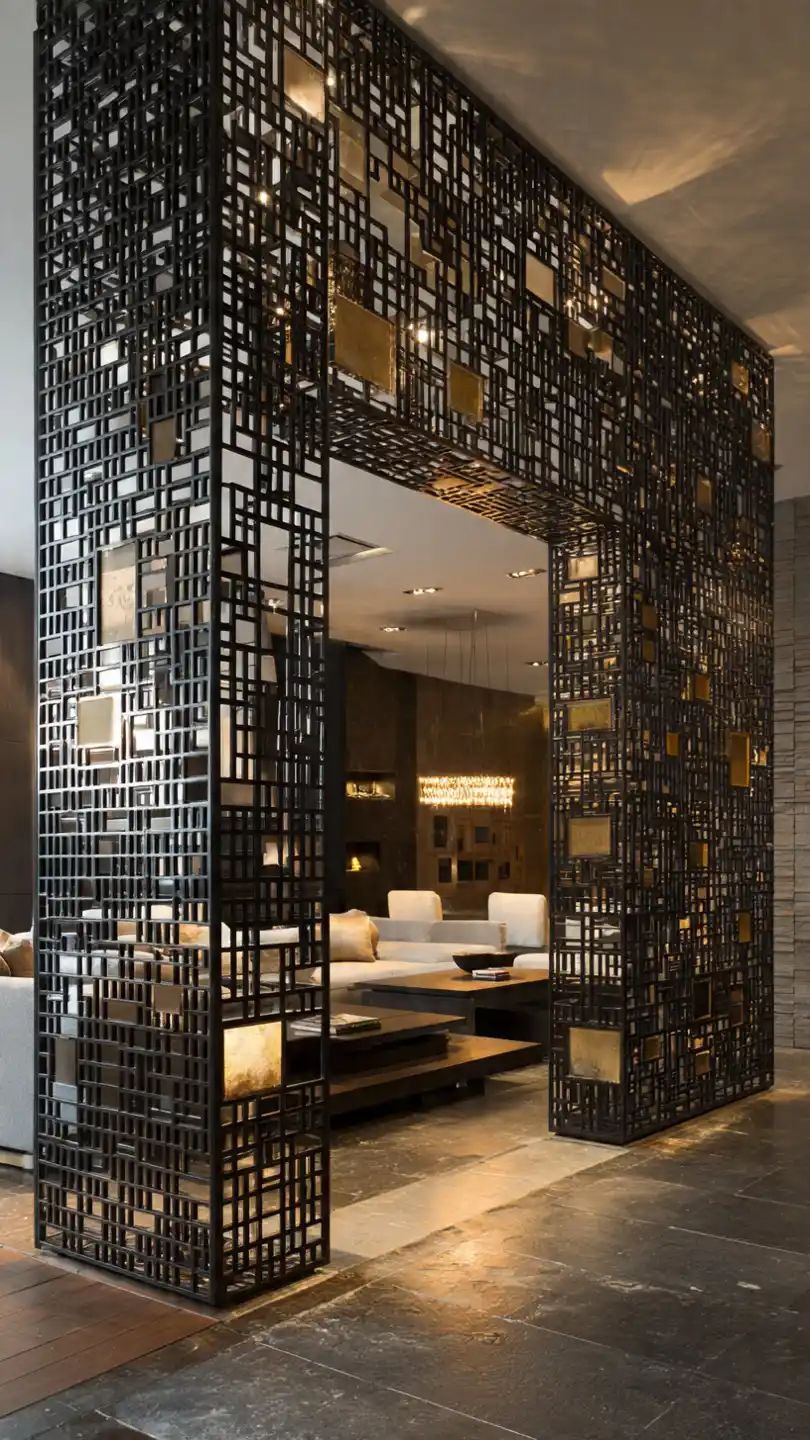
Install industrial metal grid panels—black steel mesh, brass geometric frames, or decorative iron screens—creating architectural separation with modern industrial character. Choose grid patterns based on desired transparency and visual style from tight weaves offering more privacy to open geometric frames maintaining maximum connection. Mount floor-to-ceiling or partial height depending on separation needs.
Metal grid partitions cost $300-1,500 depending on size, material, and design complexity delivering contemporary industrial aesthetic. The rigid structure creates definite separation while complete transparency maintains visual connection and light flow. Use as trellis for climbing plants adding living element to industrial framework. The architectural approach suits industrial, modern, and eclectic interiors adding distinctive character while defining spaces clearly.
Build Storage Cabinet Dividers
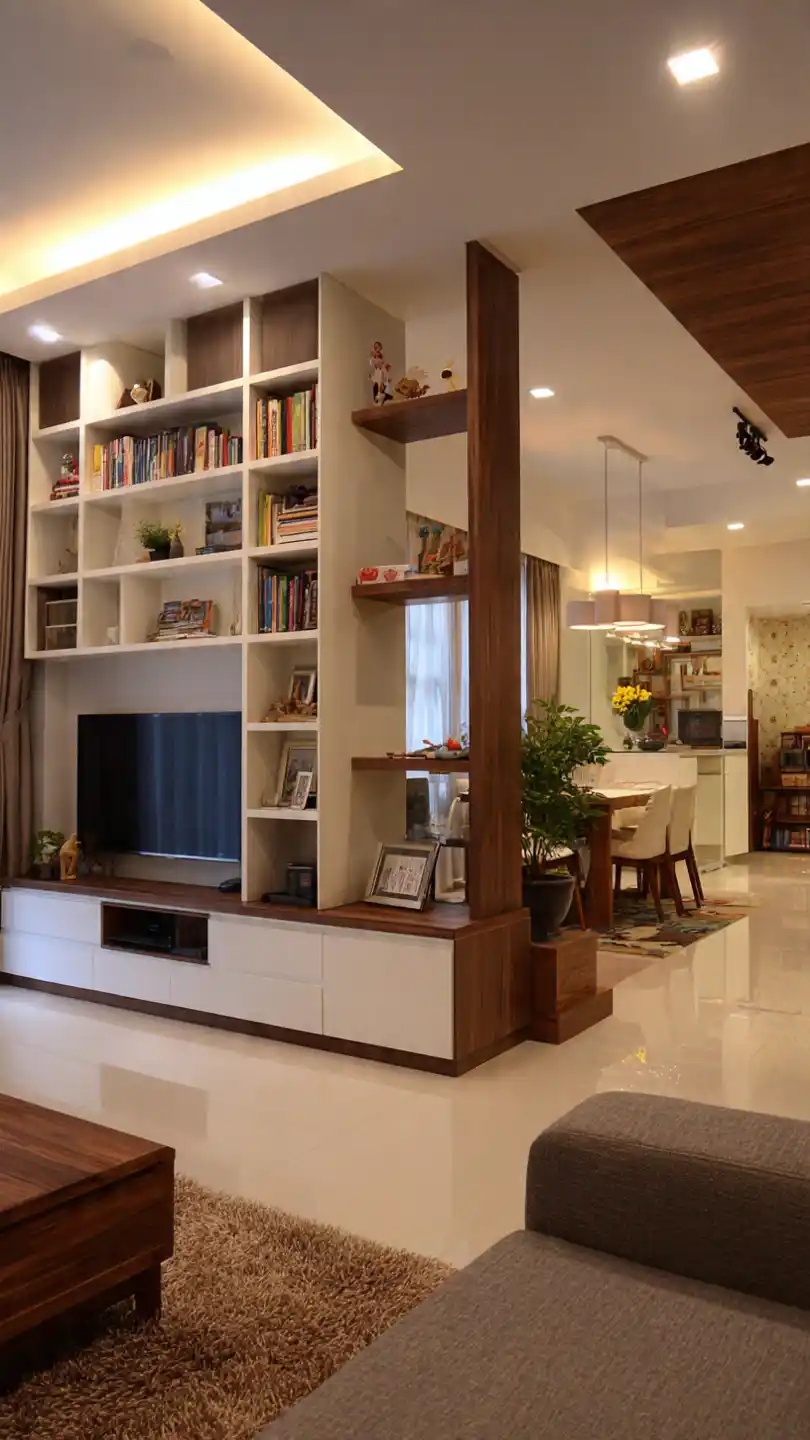
Position double-sided storage cabinets functioning as room dividers with accessible storage from both adjacent spaces. Design with varied combinations of open shelving, closed cabinets, and display areas serving different storage needs. Include media components, bar storage, or home office organization based on adjacent zone functions.
Custom storage dividers cost $1,500-6,000 depending on size, configuration, and finish quality creating functional furniture solving multiple needs simultaneously. The practical approach maximizes limited square footage providing substantial storage without consuming additional floor space beyond partition footprint. Design finished backs and sides ensuring attractive appearance from all angles. The multifunctional solution particularly suits smaller homes requiring maximum functionality from every element.
Making Living Room Partitions Work Successfully
Prioritize Light Transmission: Choose partitions allowing natural light to flow between spaces—open designs, transparent materials, or partial heights—preventing dark uninviting zones resulting from blocked windows. Light preservation maintains open atmosphere. Transparency keeps spaces feeling connected and welcoming.
Match Partition Weight to Space Scale: Select partition visual weight appropriate for room size—heavy solid partitions suit large spaces while smaller rooms require lighter transparent options preventing overwhelming cramped feeling. Scale determines appropriate choices. Proper proportion maintains balanced spatial perception.
Consider Acoustic Requirements Honestly: Determine whether you need sound separation or merely visual definition—truly private spaces require solid construction while zone suggestion needs only visual elements. Functional requirements drive material selection. Understanding actual needs prevents over or under-building.
Plan for Future Flexibility: Consider how needs might change when selecting permanent versus movable partitions—households evolve requiring adaptable spaces. Flexibility protects long-term investment value. Changeable options accommodate unpredictable future requirements.
Frequently Asked Questions About Living Room Partition Design
What Is the Best Partition for Small Living Rooms?
Transparent or semi-transparent options—glass panels, open shelving, vertical slats—work best in small spaces by defining zones without blocking light or creating visual barriers that shrink perceived room size. Avoid solid floor-to-ceiling partitions overwhelming limited square footage and creating dark cramped-feeling separate spaces.
Partial-height partitions maintain overhead openness preserving spatial volume perception while creating necessary separation below. Choose light-colored materials reflecting rather than absorbing light. Consider multifunctional options—storage shelving, plant arrangements—maximizing utility from partition footprint. Small spaces require thoughtful lightweight solutions maintaining precious openness while achieving functional separation.
How Tall Should a Room Partition Be?
Height depends on privacy requirements and desired visual effect—36-48 inch half-walls provide subtle zone definition while maintaining full visual connection, 60-72 inch partitions block seated sightlines while allowing standing connection, and floor-to-ceiling options create complete separation. Match height to specific functional needs.
Counter-height partitions (36-42 inches) work well for kitchen-living room separation blocking work surfaces while maintaining conversation connection. Eye-level partitions (54-60 inches) suit home office areas blocking screen visibility while seated. Consider varied heights within single partition—lower sections for connection, higher for privacy at specific points. Height selection balances privacy needs against openness preservation.
Do Partitions Block Natural Light?
Solid opaque partitions significantly reduce light transmission to separated zones while transparent and semi-transparent options—glass, open shelving, slats, plants—maintain most natural light flow. Partition material and design determine light impact far more than partition presence itself. Thoughtful selection preserves brightness.
Position solid partitions perpendicular rather than parallel to windows minimizing light blockage impact. Choose glass or open designs for partitions positioned between windows and interior spaces. Consider partition height—lower partitions allow light over top while full-height transparent materials maintain brightness. Test light impact at different times of day before permanent installation confirming acceptable illumination levels.
What Is the Cheapest Way to Partition a Living Room?
Curtain dividers offer lowest cost effective separation—ceiling tracks with fabric panels cost $100-300 total providing flexible soft separation. Folding screens ($100-300) require zero installation providing instant portable division. Strategic furniture placement using existing bookcases or sofas creates free separation through arrangement rather than construction.
DIY options reduce costs further—building simple wood slat screens, hanging rope or bead curtains, or creating plant arrangements using affordable varieties. Tension rod mounted curtains eliminate track installation costs for doorway-width separations. Budget approaches sacrifice some permanence and sophistication but achieve functional separation effectively while allowing financial investment in solutions proving successful before upgrading to premium options.
Can You Add a Partition to a Rental Apartment?
Yes through non-permanent solutions requiring no wall attachment or modification—freestanding bookcases, folding screens, tall plants, furniture arrangement, and tension-mounted curtain systems. Avoid any partition requiring drilling, permanent hardware, or structural attachment prohibited by typical lease agreements. Removable solutions allow full restoration at move-out.
Weighted bases stabilize freestanding partitions without wall anchoring—bookcases loaded with books, plant arrangements in heavy planters, screens with substantial feet. Tension-mounted ceiling tracks install without holes for curtain systems. Document original apartment condition before adding any partitions ensuring restoration capability. Portable solutions move to next residence protecting investment beyond current rental. Renters access most partition options through thoughtful non-permanent approaches.
Conclusion
Living room partition design offers exciting opportunities to define functional zones while maintaining the connected open atmosphere modern living demands. Strategic material selection, appropriate transparency levels, and thoughtful placement create beautifully separated spaces preserving light flow and spatial perception while solving genuine functional challenges.
Assess actual privacy and separation needs honestly. Prioritize light transmission preserving open atmosphere. Match partition scale to room proportions carefully. Consider future flexibility protecting long-term investment value. Your beautifully defined yet open living space awaits!