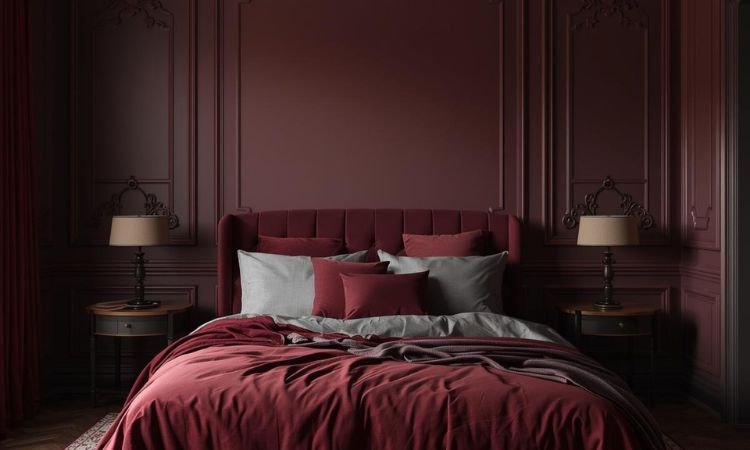
You’re tired of your boring beige bedroom but terrified of committing to color. Then you see those deep moody blue bedrooms—navy walls, midnight textiles, indigo everything—and something just clicks. They look calm but interesting, sophisticated but not stuffy, bold but somehow still restful.
Blue bedrooms have this advantage over other bold colors—they’re psychologically calming while still creating drama. Navy and deep blues literally help people sleep better according to studies, which honestly makes them the perfect bedroom color. You get visual interest during the day and better rest at night. That’s a win-win.
But here’s the thing people mess up. They pick blue that’s too bright or too light, and suddenly their bedroom looks like a kid’s nautical nursery. Or they go so dark the room feels like a cave instead of a cocoon. The right moody blue hits that sweet spot—deep enough for drama, blue enough for calm, with enough warmth that it doesn’t read cold.
I’m covering 10 moody blue bedroom ideas that nail that sophisticated sanctuary feeling. You’ll see which blue shades actually work for sleep and style, how to layer blues without everything looking matchy, what colors and materials complement deep blue, and the lighting tricks that make dark blue rooms feel cozy instead of depressing.
What Makes Moody Blue Bedrooms Actually Work
- Right Blue Makes All The Difference: Navy, midnight, and deep teal feel sophisticated while bright or baby blue read juvenile. It’s like wine versus juice where depth indicates maturity. The saturated darks create the moody aesthetic lighter blues can’t achieve.
- Warm Elements Prevent Coldness: Brass fixtures, warm wood, tan textiles, and cream accents balance blue’s natural coolness. It’s like temperature control where warm additions create comfort. The strategic warmth makes blue feel inviting rather than stark.
- Layered Blues Add Depth: Mixing navy, indigo, slate, and lighter blues creates dimension flat single-shade rooms lack. It’s like painting technique where tonal variety adds interest. The blue gradient prevents one-note appearance.
- Strategic Lighting Is Non-Negotiable: Multiple warm light sources make dark blue rooms functional and atmospheric. It’s like stage lighting where intentional illumination creates mood. The proper lighting determines whether dark blue feels cozy or cave-like.
Moody Blue Bedroom Ideas
Transform your bedroom into restful retreat with these moody blue approaches that balance drama with tranquility.
Navy Blue Accent Wall Behind Bed
Paint wall behind headboard in deep navy creating dramatic focal point. The concentrated blue delivers impact while keeping room balanced. I’ve found this approach perfect for people wanting moody vibes without full commitment to dark walls everywhere.
Choose Benjamin Moore Hale Navy, Sherwin Williams Naval, or Farrow & Ball Hague Blue for sophisticated depth. Paint from floor to ceiling behind bed only. Costs $40-80 in paint. Pair with lighter walls in cream or soft gray. The single statement wall creates boutique hotel sophistication immediately.
Full Navy Envelope Treatment
Paint all four walls including trim in same deep navy creating cocooning effect. The wraparound color makes room feel intentionally moody and intimate. And honestly, this all-in approach looks way more confident than tentative blue touches.
Use quality paint with slight sheen—eggshell or satin—reflecting light better than flat. Costs $150-250 for paint covering average bedroom. Include ceiling in same navy for maximum cocoon feeling or keep ceiling cream maintaining some brightness. The full commitment creates dramatic sanctuary feeling.
Indigo and White Contrast
Combine deep indigo walls with crisp white trim, bedding, and accents creating classic contrast. The sharp white pops against blue while maintaining clean sophisticated look. Sound familiar? This combo is timeless for reason—it just works.
Paint walls in indigo or deep blue, keep trim bright white. Use white duvet with blue pillows, white furniture against blue walls. Costs $100-200 in paint plus white textiles ($150-400). The high contrast creates fresh feeling preventing blue from feeling too heavy or dark.
Teal and Brass Jewel Box
Create luxurious space using deep teal walls with brass or gold metallic accents. The warm metals balance teal’s green undertones while adding glamour. This combination feels expensive and intentional without being stuffy.
Choose teal with blue-green balance—Sherwin Williams Oceanside or Benjamin Moore Dark Harbor. Add brass light fixtures ($80-250), gold-framed mirror ($100-300), brass hardware and accents. Costs $120-300 total for paint and basic brass upgrades. The jewel-tone palette creates rich sophisticated atmosphere.
Layered Blue Textiles Approach
Build moody blue bedroom using multiple blue textiles on neutral walls. The concentrated color on bed and windows creates impact without paint commitment. This works perfectly for renters or people wanting flexibility.
Layer navy duvet, slate blue sheets, indigo throw blanket, mix of blue pillows in various shades ($200-500 total). Add blue curtains and possibly blue area rug. Keep walls neutral—cream, warm gray, or soft white. The textile layering creates moody feeling while remaining changeable.
Midnight Blue with Natural Wood
Pair midnight blue walls with warm natural wood furniture creating balanced organic feeling. The wood tones add warmth preventing blue reading too cold while adding textural interest. I mean, this combination feels both sophisticated and approachable.
Choose oak, walnut, or teak furniture in natural finish ($1,000-2,500 for bedroom set). Paint walls in deep midnight blue. Add wood nightstands, dresser, possibly wood headboard. The natural wood grounds intense blue while adding organic warmth making room feel complete.
Blue-Gray Moody Minimalism
Use blue-tinged gray creating subtle moody effect suiting minimalist aesthetic. The muted blue reads sophisticated without intense drama. This approach works great for people wanting moody without going full dark bedroom.
Choose colors like Benjamin Moore Coventry Gray, Sherwin Williams Software, or Farrow & Ball Down Pipe. These gray-blues create depth without intense color commitment. Costs $100-150 for bedroom. Pair with white bedding, minimal decor, warm wood accents. The understated approach creates calm sophisticated atmosphere.
Dark Blue Ceiling Treatment
Paint ceiling in navy or midnight blue while keeping walls lighter creating unexpected drama. The dark overhead makes room feel intimate without overwhelming walls. This trick is all over high-end hotels because it really works.
Use Benjamin Moore Gentleman’s Gray or Sherwin Williams Loyal Blue on ceiling. Keep walls in complementary lighter shade—soft blue-gray, cream, or white. Ceiling paint costs $40-80. Add warm brass light fixture drawing attention to ceiling treatment. The overhead color creates cozy enveloping feeling.
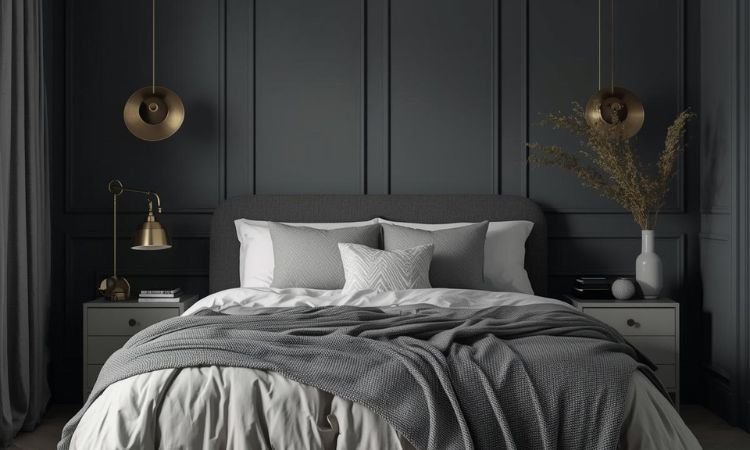
Navy Paneled Accent Wall
Install board and batten, shiplap, or picture frame molding painting in navy adding architectural interest plus color. The dimensional wall treatment creates texture preventing flat appearance. And honestly, the added detail makes color feel even more intentional.
Build wall paneling using trim boards creating geometric pattern or horizontal shiplap. Paint everything navy including trim. DIY costs $150-300 for materials, professional installation runs $500-1,000. The textured blue wall creates sophisticated focal point with architectural character.
Moody Blue and Cream Layers
Create soft moody bedroom combining slate or dusty blue with generous cream and tan accents. The warmer neutrals soften blue’s intensity creating approachable moody aesthetic. This feels way less intense than navy but still creates atmosphere.
Paint walls in softer moody blue—slate, dusty blue, or muted navy. Layer cream bedding, tan throw blankets, cream curtains, warm wood furniture. Costs $100-150 in paint plus neutral textiles ($200-500). The softened approach creates moody without dramatic maintaining restful bedroom feeling.
Making Moody Blue Bedrooms Work
- Install Multiple Light Sources: Use table lamps, floor lamps, wall sconces, and overhead creating 4-6 light sources minimum. It’s like lighting design where layering prevents darkness. The varied illumination makes dark blue functional day and night.
- Choose Warm White Bulbs: Use 2700K bulbs making blue feel cozy versus cool white making it harsh. It’s like photography lighting where temperature affects everything. The warm bulbs make blue appear inviting rather than cold.
- Add Living Elements: Plants provide necessary life and lightness in dark blue rooms. It’s like fresh air where greenery lightens mood. The organic elements prevent rooms feeling too designed or heavy.
- Layer Textures Generously: Mix velvet, linen, cotton, wood, and metal creating dimension. It’s like outfit styling where texture variety creates interest. The material mixing prevents blue reading flat or one-dimensional.
Frequently Asked Questions About Moody Blue Bedrooms
Does Navy Blue Really Help Sleep?
Studies show blue rooms actually promote better sleep—blue light receptors in eyes send calming signals to brain. Navy and deep blues work especially well creating dark environment supporting circadian rhythms. The calming effect is real, not just aesthetic preference.
Avoid bright blues which can be too stimulating. Deep moody blues create best combination of calming color psychology plus darkness beneficial for sleep quality.
Will Dark Blue Make Small Bedroom Feel Tiny?
Dark blue can make boundaries disappear creating infinite feeling rather than measurably small. The key is adequate lighting—dark rooms need 4-6 light sources preventing cave effect. Small bedrooms can totally handle dark blue with proper illumination.
Add large mirror reflecting light, keep furniture minimal, ensure good lighting. The cozy intimate feeling dark blue creates often beats trying to make small room feel bigger with light colors.
What Colors Work Best With Navy?
Cream, tan, and warm white create sophisticated palette. Brass, gold, and copper add warmth and luxury. Blush pink softens intensity. Emerald green creates jewel-tone drama. Rust or terracotta adds warmth. Warm gray works as neutral bridge.
Avoid bright colors fighting navy’s sophistication. Skip cool grays making room feel cold. The warm neutral palette lets navy shine while maintaining inviting atmosphere.
Can You Do Moody Blue in Kid’s Room?
Absolutely—navy works across all ages feeling timeless rather than trendy. Skip cartoons and themed decor letting sophisticated blue speak for itself. The calming effect benefits kids sleep too.
Kids rooms can handle playful accents while maintaining moody blue base. The color grows with them better than bright primary colors requiring repainting in few years.
How Do You Transition Blue to Other Rooms?
Use complementary neutral hallways—cream, warm gray—bridging blue bedroom to other spaces. Or extend blue in lighter shade to adjoining spaces creating flow. Include blue accents throughout home tying spaces together.
Bedrooms can be boldest rooms since they’re private spaces. Don’t feel obligated matching entire house. The closed door means bedroom can be completely different vibe from rest of home.
Building Your Blue Sanctuary
Moody blue bedroom ideas prove that bold color creates restful sophisticated spaces neutral rooms can’t match. The deep blues offer rare combination of visual drama and actual sleep benefits making them perfect bedroom choice. And honestly, waking up in space that feels special beats boring beige every single day.
Start with blue element feeling most comfortable—accent wall, textiles, or full commitment depending on confidence level. Layer warm elements ensuring blue feels inviting. Add substantial lighting making dark blue functional and atmospheric. The thoughtful approach creates bedroom that’s both beautiful and actually restful.
What’s your biggest concern about moody blue—worried about darkness, unsure which shade, or questioning whether you’ll tire of color? Tell me what’s holding you back and I’ll help figure out which blue approach makes most sense!