Your kitchen cupboards are a disaster. You’re constantly digging through stacks of mismatched containers to find lids, spices fall out every time you open the door, and you’ve bought three bottles of the same sauce because you didn’t know you already had it buried in the back. Opening your cupboards feels like playing Jenga with groceries.
The problem isn’t that you’re messy—it’s that most cupboards weren’t designed for how people actually cook and store food. Without proper systems, everything gradually devolves into chaos no matter how many times you reorganize. What you need are setups that work with your habits instead of fighting them.
I’m covering everything from simple shelf additions and container systems to pull-out solutions and zone-based organizing. You’ll see which products actually earn their space, how to maximize vertical storage, what mistakes waste money, and systems that maintain themselves with minimal effort. These ideas work in real kitchens with actual cupboard dimensions and budgets that don’t include custom cabinetry.
What Makes Kitchen Cupboard Organization Work
Visibility Prevents Waste: When you can see what you have, you actually use it instead of buying duplicates or letting things expire. It’s like inventory control where knowing your stock prevents waste. The clear organization saves money through reduced food waste.
Zones Match Workflow: Grouping items by use—baking supplies together, breakfast items near coffee maker—creates efficient cooking flow. It’s like assembly lines where proximity determines speed. The logical grouping reduces time hunting for ingredients.
Right-Sized Storage Matters: Containers and organizers that actually fit your cupboard dimensions and item quantities make or break systems. It’s like tailoring where fit determines function. The proper sizing maximizes capacity without creating unusable gaps.
Easy Access Beats Perfect Systems: Organization that’s too complicated to maintain will fail within weeks. It’s like exercise routines where sustainable beats optimal. The simple systems actually get used long-term.
Kitchen Cupboard Organization Ideas That Actually Stay Organized
Transform chaotic cupboards with these kitchen cupboard organization ideas featuring practical solutions.
Tiered Shelf Risers
Install expandable shelf risers creating additional levels within tall cupboards. The tiers prevent stacking items where bottom ones become inaccessible. It’s like stadium seating where everything stays visible.
Use risers for canned goods, spices, or dishes maximizing vertical space. Choose adjustable styles fitting various cupboard widths. This kitchen cupboard organization tool doubles usable capacity in tall spaces.
Lazy Susan Turntables
Add lazy Susans in corner cupboards or deep shelves bringing back items to front with simple rotation. The spinning platforms eliminate the black hole effect of deep cupboard corners. It’s like carousels where rotation beats reaching.
Use them for oils, vinegars, condiments, or spices keeping everything accessible. Choose sizes fitting your specific cupboard dimensions. This kitchen cupboard organization classic solves the deep cupboard problem nothing else can.
Pull-Out Drawer Systems
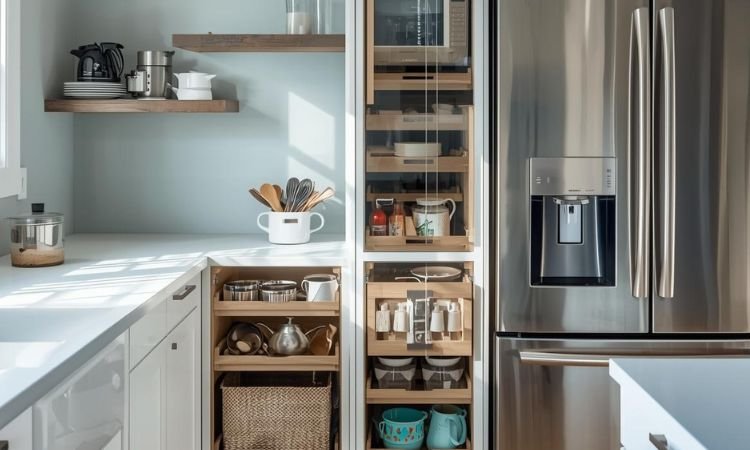
Install pull-out drawer organizers in base cupboards bringing contents forward for easy viewing. The sliding systems prevent items getting lost in back depths. It’s like file cabinets where drawers beat shelves.
These work great for pots, pans, or food storage bringing everything into view. Professional installation ensures smooth operation. This kitchen cupboard organization upgrade transforms the most frustrating base cupboards.
Clear Storage Containers
Transfer dry goods—pasta, rice, flour, cereal—into clear airtight containers creating uniform storage and immediate visibility. The transparent containers let you see quantities at a glance preventing over-buying. It’s like display cases where seeing inventory helps management.
Label containers with contents and expiration dates. Square or rectangular shapes use space more efficiently than round. This kitchen cupboard organization system looks better while actually improving functionality.
Door-Mounted Organizers
Add organizers to cupboard door interiors utilizing dead space for flat items. The door-mounted storage claims area that typically goes unused. It’s like hidden rooms where doors become storage.
Use for spices, wrap and foil, cleaning supplies, or measuring cups. Ensure organizers don’t interfere with door closing or shelf contents. This kitchen cupboard organization hack adds capacity without touching shelf space.
Stackable Can Organizers
Use angled can organizers that dispense from front while loading from back keeping cans rotated and visible. The gravity-feed system ensures oldest cans get used first. It’s like vending machines where FIFO happens automatically.
These work for canned goods, soda, or even jarred items. Choose sizes matching your typical can quantities. This kitchen cupboard organization solution solves the canned goods avalanche problem.
Drawer Dividers For Lids
Install adjustable dividers in drawers storing container lids vertically rather than stacked. The upright storage makes finding matching lids actually possible. It’s like file folders where vertical beats horizontal stacks.
Organize lids by size or match them with corresponding containers nearby. The divided system prevents the jumbled mess lids typically become. This kitchen cupboard organization detail solves one of the most annoying kitchen storage problems.
Under-Shelf Baskets
Hang wire baskets under shelves utilizing the empty space between shelf and cupboard ceiling. The suspended storage adds capacity without consuming shelf space. It’s like bunk beds where vertical layering increases capacity.
Use for lightweight items like napkins, snack bags, or paper goods. The baskets slide out for easy access. This kitchen cupboard organization addition claims wasted vertical space.
Categorized Zone System
Organize cupboards by category—baking zone, breakfast zone, snack zone, dinner prep zone. The categorical thinking creates intuitive storage where items live near where they’re used. It’s like library organization where logic determines location.
Put breakfast items near coffee maker, baking supplies together, dinner ingredients near stove. Label shelves if sharing kitchen with others. This kitchen cupboard organization approach makes cooking more efficient through thoughtful placement.
Adjustable Shelf Clips
Add shelf clips creating custom shelf heights matching your actual storage needs. The adjustable system prevents wasted vertical space above short items. It’s like custom shelving where heights match contents.
Position shelves close together for spices or cans, farther apart for tall bottles or appliances. Most cupboards support additional shelves with simple clips. This kitchen cupboard organization upgrade maximizes every inch of vertical space.
Rolling Bin System
Use rolling bins or baskets in base cupboards pulling out contents easily. The mobile storage brings deep cupboard items forward without digging. It’s like filing cabinets on wheels where access improves through mobility.
Label bins by category—potatoes and onions, baking supplies, snacks. The pull-out system works especially well in deep base cupboards. This kitchen cupboard organization solution makes lower cupboards actually functional.
Making Cupboard Organization Last
Purge Regularly: Go through cupboards every few months removing expired items, duplicates, and things you don’t actually use. It’s like closet cleaning where removal maintains order. The regular editing prevents accumulation.
Maintain Zones: Return items to their designated zones rather than just the nearest empty spot. It’s like parking spaces where assigned spots maintain order. The disciplined placement keeps systems functional.
Label Everything: Mark containers, bins, and shelves with contents helping everyone maintain organization. It’s like signs where labels guide behavior. The clear marking prevents confusion and misplacement.
One In, One Out: When buying new items, remove old ones maintaining quantity control. It’s like closet rules where incoming requires outgoing. The balanced approach prevents overwhelming storage capacity.
Frequently Asked Questions About Kitchen Cupboard Organization
What’s The Best Way To Organize Kitchen Cupboards?
Start by completely emptying cupboards and sorting contents into categories—baking supplies, breakfast items, snacks, canned goods, spices. Toss expired items and duplicates you don’t need. Measure your cupboard dimensions before buying any organizers ensuring products actually fit your specific spaces.
Group items by how you use them, not just by type—put coffee, filters, and mugs together even though they’re different categories. Store heavy items in lower cupboards, frequently used items at eye level, and occasional-use items up high. Use vertical space with risers and under-shelf baskets. The systematic approach creates intuitive organization that actually maintains itself.
How Do You Organize Deep Kitchen Cupboards?
Deep cupboards need pull-out solutions or turntables preventing items from disappearing in back areas. Install pull-out drawer systems, use lazy Susans, or employ rolling bins bringing contents forward. Store items you use rarely in back and frequently used items in front if you can’t afford pull-out solutions.
Stack items strategically—heavy, stable items on bottom, lighter ones on top. Use clear containers or bins you can pull out entirely rather than reaching behind items. Consider adding battery-powered LED lights making back areas visible. The key is creating access to depth rather than just stacking items that become inaccessible once pushed back.
Should You Use Clear Containers Or Keep Original Packaging?
Clear containers work better for dry goods—pasta, rice, flour, cereal—providing visibility, keeping food fresher through airtight seals, and looking more organized. They’re worth the investment for items you buy regularly. Original packaging works fine for items used quickly or bought infrequently since transferring isn’t worth the effort.
Consider your actual habits—if you won’t maintain a container system, original packaging beats buying containers that sit empty. Start with containers for your most-used items seeing if you maintain the system before investing in complete sets. The practical approach means organization matches your real behavior not idealized Pinterest versions.
How Often Should You Reorganize Kitchen Cupboards?
Do quick maintenance weekly—return misplaced items, wipe up spills, straighten containers. Monthly spend 15 minutes checking for expired items and restocking organization supplies. Do complete reorganization only when your current system stops working—maybe twice yearly or when life changes affect your cooking patterns.
If you’re reorganizing monthly, your system isn’t working for your actual habits. Good organization maintains itself through daily use with minimal effort. The goal is creating systems that work with how you cook rather than fighting your natural patterns. Constant reorganization signals you need different systems not more discipline.
What Are The Biggest Kitchen Cupboard Organization Mistakes?
Buying organizers before measuring cupboards and understanding your actual storage needs wastes money on products that don’t fit or work. Over-organizing with complicated systems you won’t maintain creates clutter rather than solving it. Keeping items you don’t use fills cupboards with things that should be donated or tossed.
Storing items away from where you actually use them fights natural workflow making organization unsustainable. Buying cheap organizers that break or don’t function properly means replacing them repeatedly costing more long-term. Not maintaining systems once established—organization requires minimal ongoing effort or it fails. The biggest mistake is copying someone else’s system instead of organizing for your specific cooking style and habits.
Creating Your Functional Kitchen Storage
Kitchen cupboard organization ideas prove that chaotic storage isn’t your fault—it’s about systems matching how you actually cook. The smart strategies maximize space while creating intuitive storage that maintains itself. I’ve found that well-organized cupboards genuinely make cooking more enjoyable since you spend time preparing food instead of hunting for ingredients.
Start by completely emptying cupboards and sorting what you actually keep. Measure your spaces before buying any products. Create zones based on how you use items, not just what they are. Add organizers that fit your specific cupboards and quantities. The thoughtful approach transforms cupboards from frustrating black holes into functional storage you can actually navigate.
What’s your biggest kitchen cupboard frustration? Share your storage challenges below!