A wooden staircase railing does more than keep you safe on the stairs. It shapes the entire character of your entryway, hallway, or open living space, blending warmth, craftsmanship, and architectural style into one functional feature.
Whether you prefer rustic oak, sleek walnut, or painted traditional spindles, a wooden staircase railing can be tailored to nearly any interior. This collection of 22 inspiring ideas covers materials, profiles, and finishes worth exploring.
What Makes a Wooden Staircase Railing Worth the Investment
A well-chosen railing balances safety, style, and long-term value.
- Material Matters: Oak, maple, and walnut each bring different grain patterns and durability.
- Profile Choices: Round, square, and sculpted handrails change how a staircase feels in the hand.
- Color Harmony: Staining the railing to match your floor creates a cohesive, seamless look.
- Baluster Style: Straight, turned, or metal balusters shift the design from classic to modern.
- Newel Posts: Statement posts anchor the staircase and frame the bottom step.
- Budget Planning: Softwoods cost less, while hardwoods offer greater longevity and polish.
- Safety Codes: Baluster spacing and handrail height must meet local building requirements.
- Maintenance: Regular oiling or sealing keeps wooden railings rich and protected for years.
1. Classic Oak Wooden Staircase Railing for Traditional Homes
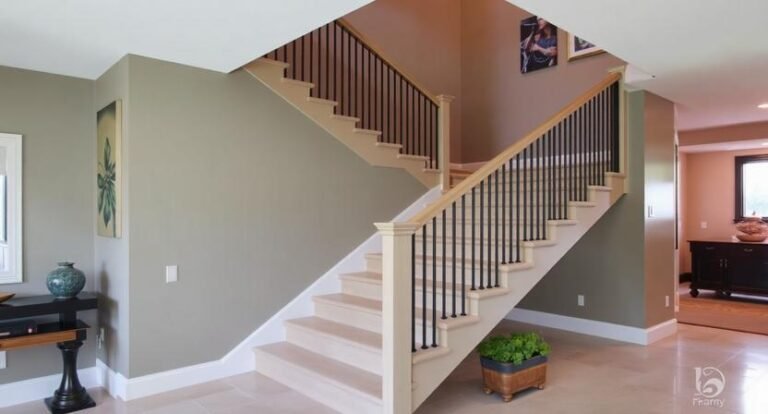
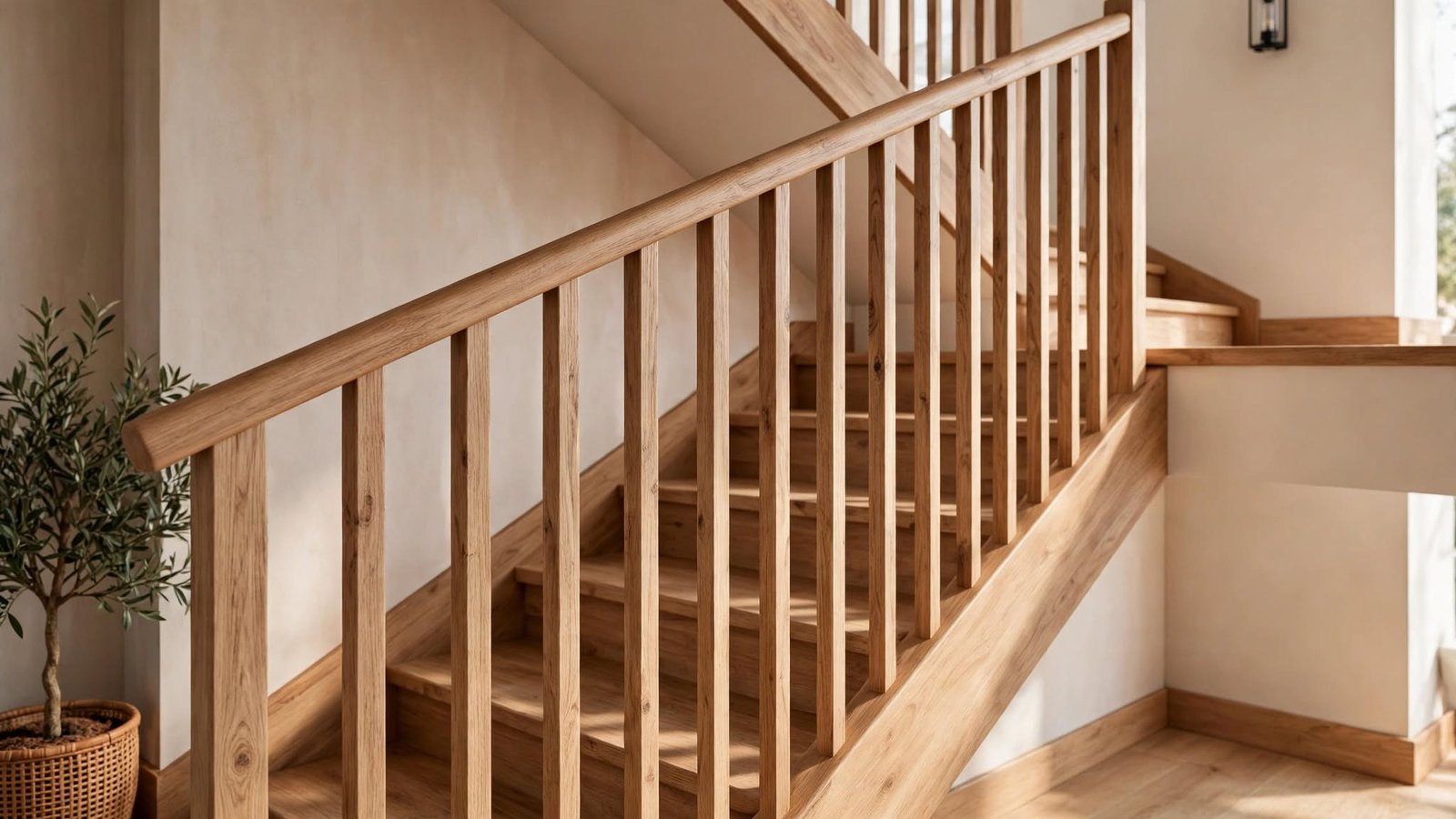
Imagine a warm oak wooden staircase railing running through a traditional hallway. The honey-toned grain catches natural light from nearby windows, while turned balusters create a timeless rhythm. This look pairs beautifully with hardwood floors and neutral walls, giving the entryway a welcoming, established feel.
A wooden staircase railing like this works especially well in family homes where durability and classic charm matter equally. The natural finish also hides everyday wear gracefully.
2. Modern Minimalist Wooden Staircase Railing With Clean Lines
Picture a sleek wooden staircase railing stripped of ornament, where straight balusters and a slim handrail define the design. This minimalist approach suits contemporary interiors, letting the staircase become a quiet architectural statement rather than a decorative focal point.
Choosing a wooden staircase railing with clean geometry keeps sightlines open and makes small spaces feel larger. Matte finishes enhance the understated effect.
3. Dark Walnut Wooden Staircase Railing for Rich Contrast
Discover how a dark walnut wooden staircase railing creates dramatic contrast against light walls and pale treads. The deep brown tones add sophistication and weight to the staircase, turning it into a striking feature that anchors the surrounding interior.
This wooden staircase railing style suits both modern and transitional homes. Pair it with brass or black hardware for a polished finish.
4. Rustic Reclaimed Wood Wooden Staircase Railing Ideas
Consider a reclaimed wooden staircase railing that brings barn wood texture and history into your home. Weathered grains, knots, and uneven tones give the staircase a farmhouse character that feels lived-in and authentic rather than polished and new.
A rustic wooden staircase railing pairs naturally with exposed beams, stone accents, and wide plank floors. Each post carries its own unique story.
5. White Painted Wooden Staircase Railing for Bright Spaces
Anchor a bright, airy entryway with a white painted wooden staircase railing. The crisp finish reflects light and makes narrow stairwells feel more open, while subtle molding on the balusters keeps the design from looking too plain.
This wooden staircase railing approach works beautifully in coastal, cottage, and modern farmhouse interiors. A natural wood handrail adds warmth on top.
6. Two-Tone Wooden Staircase Railing With Contrasting Handrail
Layer a two-tone wooden staircase railing by pairing painted balusters with a stained handrail. This combination adds depth and visual interest without overwhelming the space, and it lets you tie the staircase to both your trim and your flooring at once.
A two-tone wooden staircase railing offers flexibility when matching existing decor. It bridges traditional and modern elements effortlessly.
7. Craftsman Style Wooden Staircase Railing With Square Posts
Build a Craftsman-inspired wooden staircase railing featuring thick square newel posts and simple vertical balusters. The honest joinery and sturdy proportions reflect the movement’s emphasis on handcrafted quality, natural materials, and enduring design.
This wooden staircase railing style complements bungalows and arts-and-crafts homes. Quarter-sawn oak is a particularly fitting wood choice.
8. Curved Wooden Staircase Railing for Elegant Spiral Stairs
Bring graceful movement to a curved staircase with a wooden staircase railing that follows the sweep of the steps. Bent handrails and evenly spaced balusters create a flowing line that draws the eye upward and adds a touch of elegance.
A curved wooden staircase railing demands precise craftsmanship. The result is a sculptural feature that elevates the entire foyer.
9. Industrial Wooden Staircase Railing With Metal Balusters
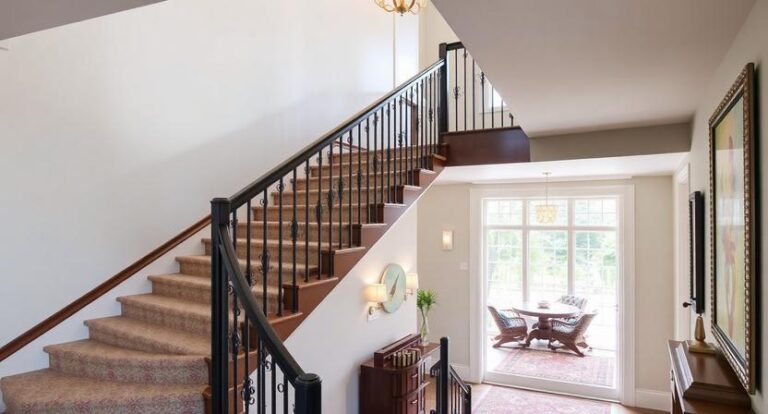
Transform a plain staircase by combining a wooden staircase railing with slim metal balusters. The warm wood handrail softens the cool industrial feel of iron or steel, creating a balanced look that suits loft apartments and modern homes alike.
This hybrid wooden staircase railing design keeps sightlines open while adding structural interest. Black metal pairs especially well with medium oak.
10. Farmhouse Wooden Staircase Railing With Chunky Newel Posts
Frame a farmhouse staircase with a wooden staircase railing built around oversized newel posts. The substantial proportions ground the design and give the entryway a welcoming, hand-built character that feels rooted in rural tradition.
A farmhouse wooden staircase railing often uses stained pine or oak. Distressed finishes add to the relaxed country aesthetic.
11. Mid-Century Modern Wooden Staircase Railing With Slatted Design
Explore a mid-century wooden staircase railing defined by horizontal or vertical wood slats instead of traditional turned spindles. Clean lines, warm teak or walnut tones, and geometric precision capture the spirit of 1950s and 1960s design.
This wooden staircase railing style fits open-plan homes with retro furnishings. The slatted pattern also adds a subtle screen effect.
12. Coastal Wooden Staircase Railing With Weathered Gray Finish
Shape a relaxed coastal look with a weathered gray wooden staircase railing. The soft, sun-bleached tone mimics driftwood and pairs naturally with white shiplap, linen textiles, and ocean-inspired palettes for a breezy seaside feel.
A coastal wooden staircase railing works in beach houses and suburban homes alike. Light sealants protect the finish without darkening the wood.
13. Traditional Turned Baluster Wooden Staircase Railing
Define a formal entryway with a traditional wooden staircase railing featuring intricately turned balusters. Lathe-carved profiles, decorative newel posts, and a sculpted handrail evoke the craftsmanship of Victorian and colonial-era staircases.
This wooden staircase railing style pairs beautifully with wainscoting and crown molding. Dark stains enhance the depth of the turnings.
14. Open Riser Wooden Staircase Railing for Airy Interiors
Introduce an open-riser design where a wooden staircase railing complements visible treads and empty space between steps. The airy structure lets light pass through, making the staircase feel lighter and more contemporary within the room.
An open-riser wooden staircase railing suits modern lofts and compact homes. A simple handrail keeps the focus on the architectural geometry.
15. Cable and Wooden Staircase Railing Hybrid Design
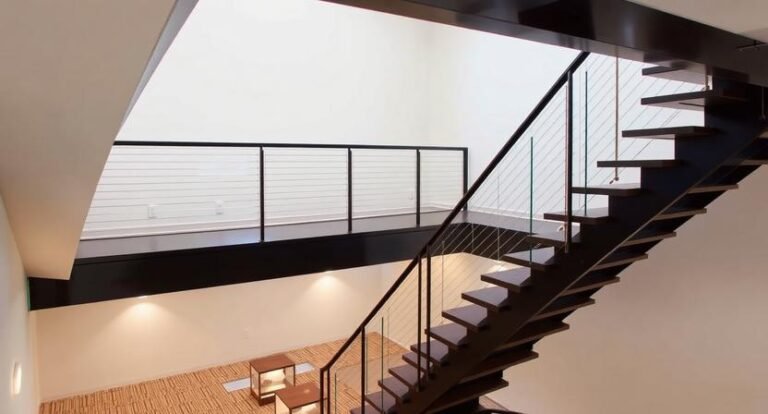
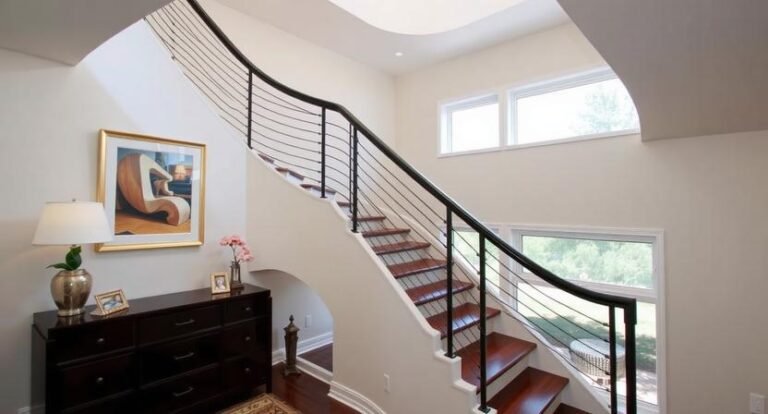
Suspend horizontal cables between wooden posts to create a wooden staircase railing with a sleek, modern edge. The combination of warm timber and thin steel lines produces an open, almost floating effect that suits minimalist and industrial interiors.
This wooden staircase railing hybrid is popular in contemporary homes. Cables keep views clear while wooden posts provide structural warmth.
16. Handcrafted Wooden Staircase Railing With Carved Details
Ground your staircase in artistry with a handcrafted wooden staircase railing featuring carved motifs, fluted posts, or sculpted scrollwork. Each detail reflects the skill of the maker and turns the railing into a piece of functional art.
A handcrafted wooden staircase railing often becomes a family heirloom. Custom carving lets you incorporate personal symbols or patterns.
17. Scandinavian Wooden Staircase Railing With Pale Birch Tones
Position a light birch or ash wooden staircase railing at the heart of a Scandinavian-inspired interior. Pale tones, simple profiles, and uncluttered lines reflect the Nordic love of natural materials, calm palettes, and functional beauty.
This wooden staircase railing style brightens hallways and pairs well with white walls. A clear matte finish preserves the wood’s soft glow.
18. Painted Black Wooden Staircase Railing for Bold Interiors
Fill a modern entryway with drama using a black painted wooden staircase railing. The deep, matte finish creates a striking silhouette against pale walls and light wood floors, giving the staircase a graphic, almost sculptural presence.
A black wooden staircase railing works in industrial, modern, and transitional homes. It pairs especially well with brass or gold accents.
19. Half-Wall Wooden Staircase Railing With Wood Cap
Place a solid half-wall topped with a wooden staircase railing cap along your steps. This design offers privacy and safety while still showcasing the warmth of natural wood, making it ideal for split-level or basement staircases.
A half-wall wooden staircase railing creates a clean, modern look. The wood cap ties the wall to adjacent flooring and trim.
20. Space-Saving Wooden Staircase Railing for Narrow Stairwells
Craft a slim wooden staircase railing designed specifically for tight stairwells. A narrow handrail mounted close to the wall, paired with minimal balusters, preserves precious inches of walking space without sacrificing safety or style.
This wooden staircase railing solution suits urban apartments and older homes. Wall-mounted rails are both practical and elegant.
21. Herringbone Wooden Staircase Railing With Patterned Balusters
Draw attention with a wooden staircase railing that uses patterned balusters arranged in a herringbone or lattice layout. The repeating geometry adds texture and rhythm, turning the staircase into a design feature rather than a simple passage.
A patterned wooden staircase railing brings personality to neutral interiors. It pairs well with both modern and traditional furniture.
22. Transitional Wooden Staircase Railing Blending Old and New
Elevate your staircase with a transitional wooden staircase railing that merges classic forms with modern finishes. Simple newel posts, subtly tapered balusters, and a medium-toned stain create a look that feels current yet timeless in any home.
A transitional wooden staircase railing adapts easily to changing decor trends. It is a safe, stylish choice for resale-friendly renovations.
Frequently Asked Questions
Q. What is the best wood for a wooden staircase railing?
Ans. Oak, maple, and walnut are top choices for a wooden staircase railing because they balance durability, grain beauty, and long-term performance.
Q. Can a wooden staircase railing be painted instead of stained?
Ans. Yes, a wooden staircase railing can be painted in any color, though priming and sealing are essential for a smooth, lasting finish.
Q. How do I maintain a wooden staircase railing over time?
Ans. Dust weekly and reapply oil or sealant every few years to keep your wooden staircase railing protected and looking fresh.
Conclusion
A wooden staircase railing is one of the most impactful details you can add to a home. From rustic reclaimed timber to sleek modern slats, the options cover every style and budget.
Use these 22 ideas as inspiration, match the wood to your existing floors and trim, and enjoy a staircase that feels both safe and beautifully crafted for years to come.