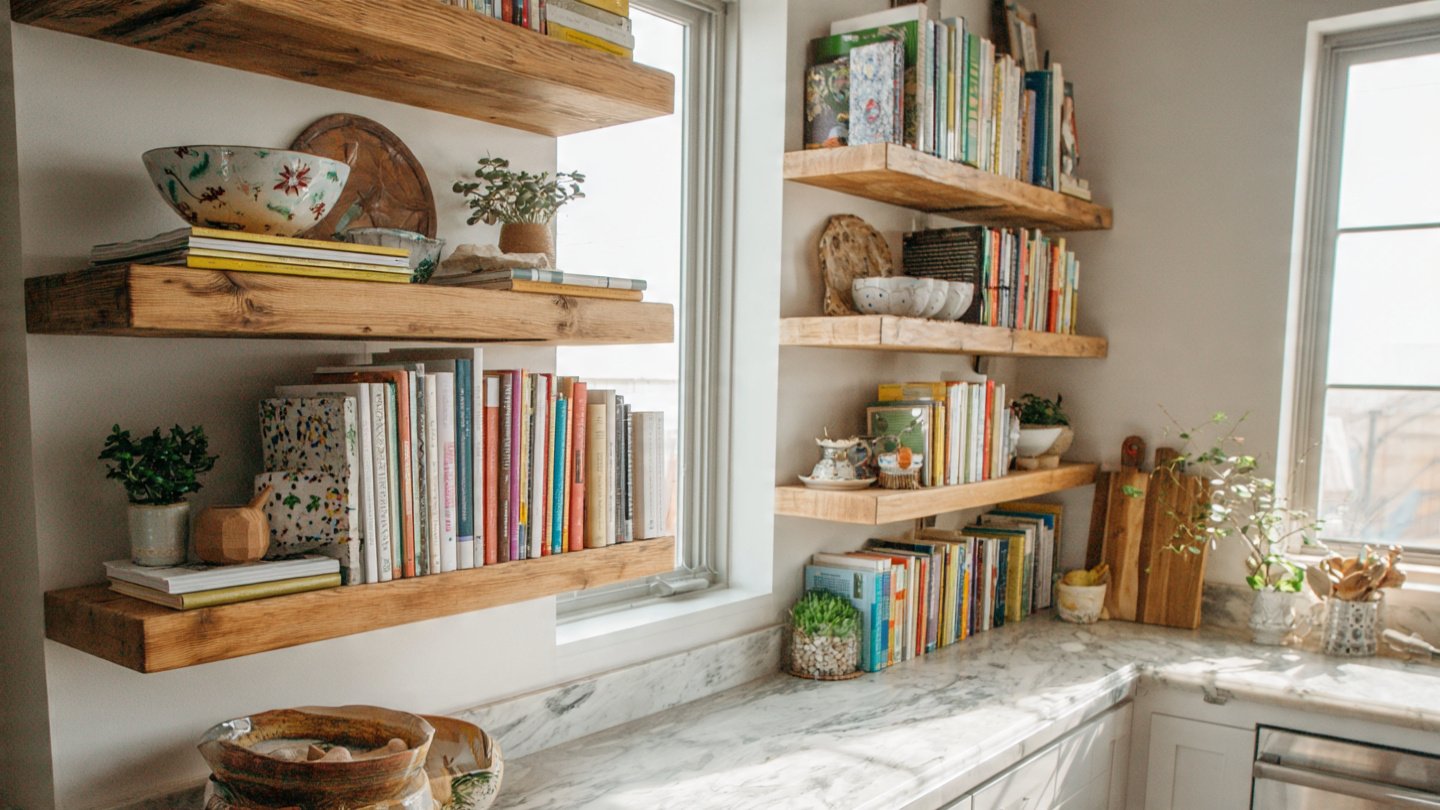
In the heart of a modern cottage, a collection of recipes is more than a list of instructions; it is a “living archive” of the homestead’s history and potential. When you explore cookbook shelf ideas for the kitchen, you are looking to build a specialized laboratory for culinary wisdom. A well-ordered book shelf acts as a “literary clearing,” providing the high-ground inspiration needed to transform the daily harvest into a celebratory feast. By moving your books from the shadows into the light, you ground your kitchen in the artisan traditions of those who cooked before you.
By layering colorful spines with trailing plants and rustic wire baskets, you build a sanctuary that feels both intellectual and incredibly cozy. Whether you are utilizing a dedicated wooden book stand or filling a high-vibration shelf between white cabinets, these designs help you curate a space of profound domestic order. These inspirations are gathered to help you turn your kitchen walls into a beacon of knowledge and culinary grace.
Discover these curated paths to a more organized and soulful kitchen library.
1. The Literary Clearing: White Cabinets and Open Shelving
Utilize the “negative space” between your white cabinets to install a dedicated shelf for your favorite volumes. You’ll love how the varied colors of the book jackets provide a rhythmic “pop” against the luminous white backdrop. This design treats your cookbooks as primary works of art within your culinary laboratory, ensuring that your “spirit guides” for flavor are always within reach during the heat of creation.
2. The Artisan Archive: Wire Baskets and Textured Storage
For a more rustic, cottage-inspired look, use wire baskets to house your book collection on a counter or shelf. You’ll love how the industrial texture of the wire provides a “sturdy horizon” for the soft paper spines. This method allows you to group books by theme—such as “baking” or “harvesting”—creating specialized clearings of information that can be easily moved to your workstation as needed.
3. The Botanical Library: Books Draped in Greenery
Merge the “life of the field” with the wisdom of the page by interspersing trailing plants among your cookbooks. You’ll love how the organic lines of the vines soften the geometric rows of books, creating a high-vibration sanctuary for the mind. This botanical layering reminds you that every recipe is rooted in the earth, bridging the gap between the living garden and the written word.
4. The Focused Study: The Dedicated Wooden Book Stand
Elevate your current project by placing it on a wooden book stand in a prominent “high-ground” spot on your counter. You’ll love how this simple artisan tool clarifies your focus, protecting the pages from the “chaos of the clearing” while you work. It turns the act of following a recipe into a rhythmic ritual, honoring the craft of the author and the focus of the cook.
5. The Full-Horizon Shelf: Floor-to-Ceiling Culinary Wisdom
If you are a true collector, dedicate a full vertical “horizon” to your culinary library. You’ll love how a floor-to-ceiling shelf transforms the energy of the kitchen, making it feel like a professional laboratory of taste. This design provides a sense of monumental stability and resourcefulness, signaling that this home is a place where the “harvest of ideas” is just as important as the harvest of the field.
Sacred Principles for a Kitchen Library
Just as a recipe requires a balance of elements, your cookbook shelf should balance accessibility with domestic beauty.
- Rhythmic Grouping: Organize books by spine color for a “luminous” effect, or by frequency of use for a “functional clearing.”
- The Plant Pulse: Always include at least one botanical element to keep the shelf energy fresh and “alive.”
- Accessibility Horizon: Keep your “daily bread” books at eye level, while placing seasonal or rare volumes on the higher ground of the top shelves.
- Texture Mixing: Combine paper volumes with wood, metal, and ceramic “spirit objects” to create a tactile and artisan-inspired display.
- Negative Space: Don’t pack the shelves too tightly; leave small gaps for the spirit of the room to breathe.
Frequently Asked Questions
Q: How do I protect my books from kitchen grease?
Ans: Place your library shelf away from the direct “line of fire” of the stove. Utilizing a book stand during actual cooking also keeps the pages on a high-ground away from splashes.
Q: My kitchen is too small for a full shelf. What can I do?
Ans: Use the “clearing” of your counter! A simple set of artisan bookends or a small wire basket can hold your top five “spirit guides” without taking up vertical space.
Q: What is the best way to organize cookbooks?
Ans: Many find that grouping by “seasonal harvest” or “cooking style” (e.g., air fryer, slow cooker) creates the most specialized laboratory for their specific needs.
Walking Through the Culinary Grove
As you pull a well-worn volume from the shelf and the light catches the dust of the flour on its cover, may you find the profound inspiration that only a kitchen library can provide. By embracing these cookbook shelf ideas and grounding your kitchen in the wisdom of the written word and the botanical field, you have built a sanctuary that truly honors the artisan spirit. Let these shelves be a reminder that your home is a place of perpetual learning and shared flavor. Before the next meal begins, consider adding a new book, a trailing plant, or a sturdy stand to anchor your own journey toward a more mindful and beautiful kitchen.