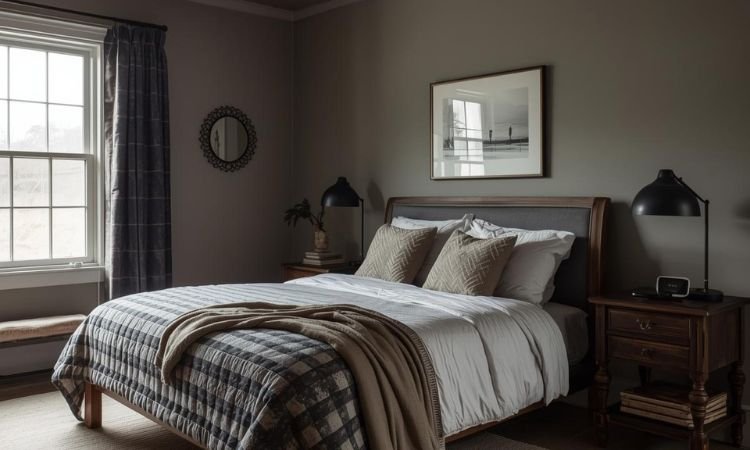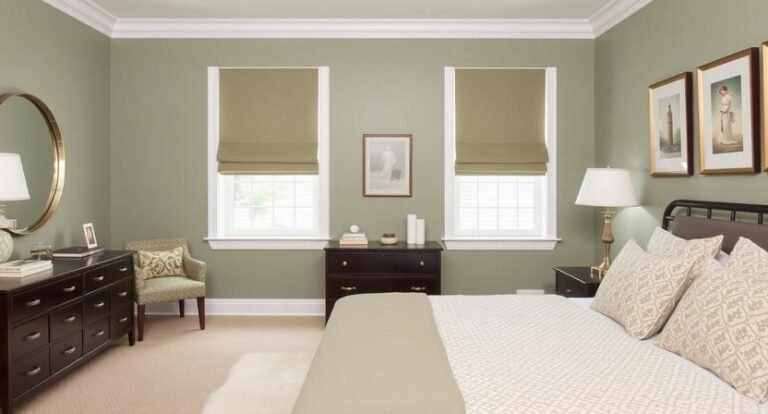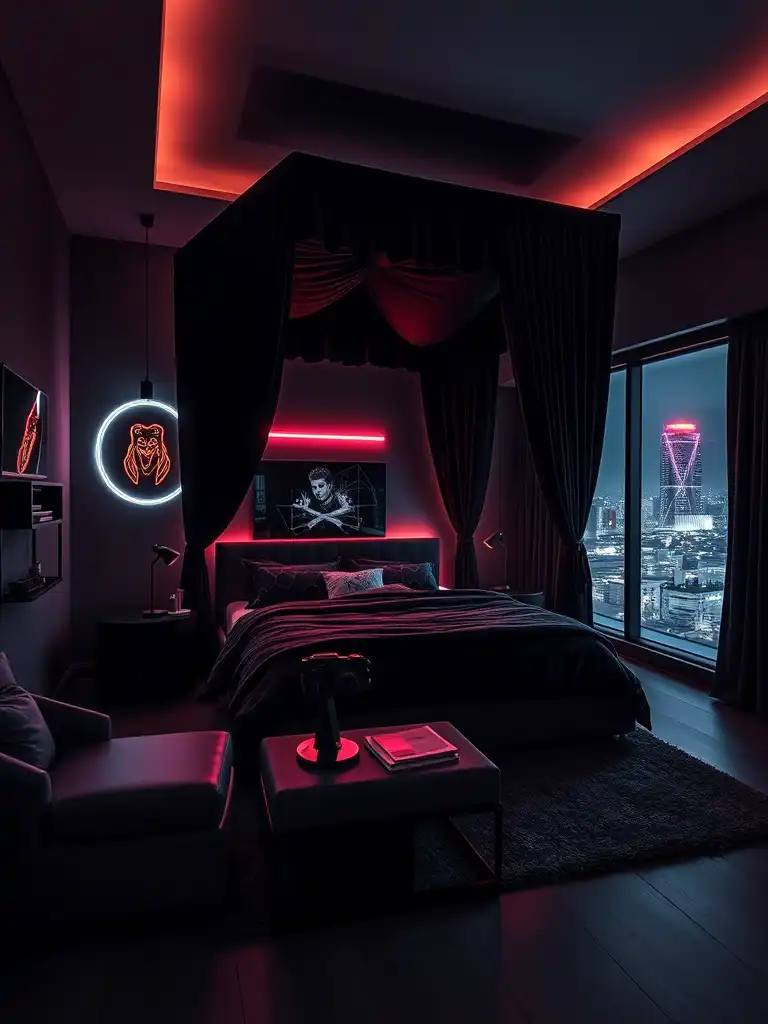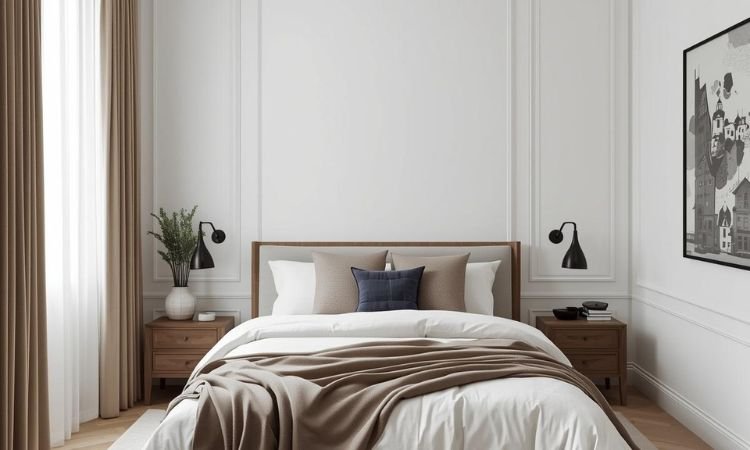
A moody bedroom doesn’t require dark paint. With white walls as a neutral canvas, you can build atmosphere through layered textiles, strategic lighting, and rich-toned furniture—creating a space that feels calm, sophisticated, and deeply restful.
In a standard 12’x14′ (168 sq ft) room, white walls actually enhance the moody effect by reflecting warm light and making shadows feel intentional, not flat.
This approach works especially well in low-light rooms, rentals, or homes where painting isn’t an option. Instead of relying on color, mood comes from texture, contrast, and curated contrast: black bedding against white walls, walnut wood against crisp trim, brass lamps casting soft pools of light.
These 13 ideas prove that white walls can be anything but sterile.
Why White Walls Can Feel Moody
Light becomes the mood-maker: Warm, layered lighting creates shadow and depth on white surfaces.
Contrast drives drama: Black, charcoal, or deep wood tones pop against white for instant richness.
Texture adds soul: Wool, linen, velvet, and wood bring warmth without color.
Flexibility for renters: No paint needed—mood comes from furniture, fabric, and fixtures.
13 Moody Bedroom Ideas with White Walls That Create Depth Without Darkness
All concepts work in rooms as small as 12’x12′ and assume daily use.
1. Charcoal Bedding on Crisp White Walls
Layer a deep charcoal duvet, black linen sheets, and a wool throw over a white mattress to create immediate contrast against white walls.
Add two lumbar pillows in textured black or charcoal to complete the monochromatic scheme without introducing pattern or color.
2. Black Platform Bed with Minimal Frame
Choose a low-profile platform bed in matte black metal or stained wood with clean lines and no headboard to keep sightlines open.
The dark base grounds the room while allowing white walls to reflect ambient light, creating a modern, gallery-like calm.
3. Walnut Nightstands and Dresser
Use solid walnut or black-stained wood nightstands and a matching dresser to introduce organic warmth and weight against bright walls.
The rich grain and deep tone add visual anchor points without overwhelming a small space or clashing with white trim.
4. Wall-Mounted Black Sconces with Fabric Shades
Install adjustable black wall sconces with off-white fabric shades on either side of the bed to provide focused reading light and free up surface space.
Position the shades at 50″–52″ height so light glows downward without glare, casting soft shadows that deepen the room’s mood.
5. Large Black-and-White Art Above Bed
Hang a single large-scale black-and-white photograph or abstract print centered above the bed in a thin black or natural wood frame.
Avoid multiple pieces; let this one image serve as the focal point that ties the monochrome palette together.
6. Tonal Area Rug in Charcoal and Oat
Lay a 9’x12′ wool or jute rug with subtle tonal variation—charcoal base, oat highlights, no pattern—to add softness and visual weight underfoot.
Anchor all bed legs on the rug to define the sleeping zone and prevent the space from feeling fragmented.
7. Floor-to-Ceiling Blackout Curtains in Charcoal Linen
Hang heavy blackout curtains in charcoal or deep gray linen from ceiling-mounted tracks to frame windows and control light.
The vertical lines draw the eye upward, enhancing perceived height, while the fabric absorbs sound and adds quiet luxury.
8. Matte Black Hardware and Fixtures
Use consistent matte black finishes on door handles, light switches, and (if en suite) faucets to create cohesion and subtle contrast.
Repeat the tone in bed frames, sconces, or curtain rods to unify the space without introducing shine or distraction.
9. Single Statement Plant in Black Pot
Place a sculptural snake plant, fiddle leaf fig, or olive tree in a matte black ceramic or concrete pot beside the bed or in a corner.
Its organic shape softens hard lines, and the dark pot blends with furniture while adding life to the monochrome scheme.
10. Floating Shelves in Black or Walnut
Mount 2–3 floating shelves in black-painted wood or walnut to display books, a ceramic vessel, or a small speaker—no more than 6 items total.
Keep styling minimal to maintain the room’s serene, uncluttered feel while adding functional storage.
11. Layered Bedding in Black, Gray, and Cream
Combine a black duvet cover, charcoal sheets, oat-colored blanket, and one cream lumbar pillow for depth through tone, not pattern.
Use natural fibers like linen, cotton, and wool to add tactile warmth that prevents the look from feeling cold or stark.
12. Concealed Closet Behind Flush White Panels
Hide the closet behind full-height doors painted to match the walls with push-to-open hardware for a seamless, uninterrupted surface.
Inside, line with LED strip lighting on a motion sensor so the space remains functional without breaking the room’s calm envelope.
13. Cove Lighting for Ambient Glow
Install a continuous cove along the perimeter or one wall with 2700K LED tape to bounce warm, indirect light off the ceiling and upper walls.
This eliminates harsh overhead lighting and creates a soft, enveloping glow that makes white walls feel intimate, not clinical.
Common Mistakes and Fixes
- Using cool-white lighting
Fix: Stick to 2700K–3000K bulbs. Cool light (4000K+) makes white walls feel sterile and ruins the moody effect. - Skipping contrast in furniture
Fix: Introduce at least one dark element—bed, rug, or dresser—to prevent the room from feeling flat or hotel-like. - Over-accessorizing with decor
Fix: Edit ruthlessly. In a monochrome scheme, clutter reads as chaos. Keep only what you touch weekly. - Ignoring acoustics
Fix: Add a rug, heavy curtains, and upholstered seating. Hard surfaces amplify echo in white-walled rooms. - Mixing too many wood tones
Fix: Stick to one primary wood (e.g., walnut or oak). If your floor is light, go dark on furniture—and vice versa.
Mood Comes from Shadow, Not Paint
A moody bedroom with white walls proves that atmosphere isn’t about color—it’s about intention. With the right mix of dark furniture, warm light, and rich texture, white becomes a backdrop for calm, not emptiness.
Have you created a moody space with white walls? Did you lean into black bedding, walnut wood, or layered lighting?
Share your approach in the comments—we’d love to hear how you’ve made white walls feel deeply restful.