Your studio apartment or open-concept room needs separation but walls would make everything feel cramped. You need defining the sleeping area from living space, creating a home office zone, or just adding some visual division. Permanent walls aren’t an option and you’re stuck on solutions that divide without making small spaces feel like closets.
Small partition design creates zones in tight spaces without the claustrophobia solid walls cause.
I’m covering 11 creative approaches from open shelving and half-walls to sliding panels and plant dividers. You’ll see which partitions work in compact rooms, how to install without damaging walls, what mistakes shrink spaces further, and designs that add function while dividing.
Benefits Of Smart Room Partitioning
Defined Zones Without Walls: Partitions create separate areas maintaining open flow and natural light. Visual separation happens without physical barriers closing rooms in.
Flexible Solutions For Renters: Freestanding dividers allow spatial changes without permanent modifications. Removable options adapt as needs change over time.
Multi-Functional Elements: Best partitions serve dual purposes—storage, display, seating—beyond just dividing. Added functionality justifies the floor space they consume.
Light And Air Flow: Open or partial partitions maintain brightness and ventilation unlike solid walls. Breathing room prevents claustrophobic feelings in tight quarters.
11 Small Partition Design Ideas That Divide Without Closing Off
Create defined spaces with these small partition design ideas featuring space-smart solutions.
Open Bookshelf Divider
Use open bookcases creating see-through barriers that define zones while maintaining visual connection. The double-sided storage provides function from both sides. It’s like permeable walls where division doesn’t mean isolation.
Choose units matching room height or slightly lower maintaining openness. Style both sides cohesively. This small partition design classic delivers storage and separation simultaneously.
Hanging Fabric Panels
Suspend curtain panels from ceiling tracks creating flexible soft divisions you can open or close. The fabric barriers add color and texture while allowing complete flexibility. It’s like theater curtains where control matters.
Use ceiling-mounted tracks rather than tension rods for clean installation. Choose lightweight fabrics avoiding heavy drapery. This small partition design solution works perfectly for renters needing removable options.
Slatted Wood Screen
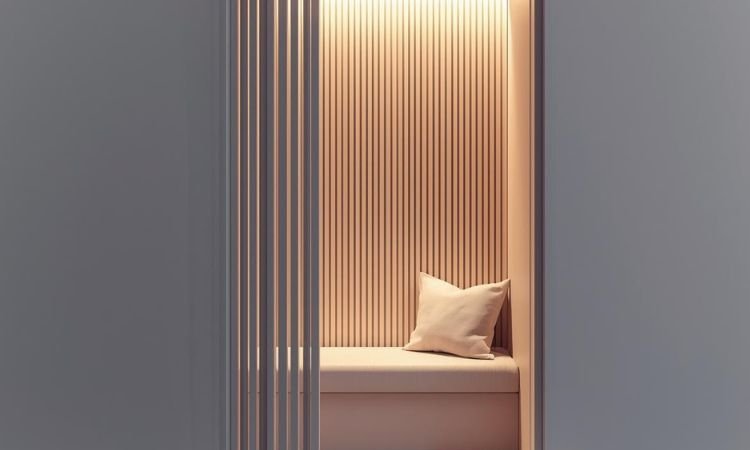
Build or buy vertical slat screens creating modern barriers that filter views without blocking completely. The spaced slats maintain light flow while defining separate areas. It’s like venetian blinds turned vertical where gaps provide benefits.
Paint or stain matching room decor. Position to block specific sightlines while maintaining openness. This small partition design approach delivers contemporary aesthetics with practical function.
Glass Panel Partition
Install glass panels creating transparent barriers that divide acoustically while maintaining visual openness. The clear division preserves natural light and sight lines. It’s like aquarium walls where separation stays invisible.
Use tempered safety glass with minimal framing. Clean regularly preventing smudges. This small partition design delivers maximum division with minimum visual weight.
Half-Height Wall
Build short walls stopping at 4-5 feet creating definition without ceiling-high barriers. The partial walls separate zones while preserving openness above. It’s like cafe walls where partial beats complete.
Top with plants, books, or display items using the surface functionally. Paint matching or contrasting with room. This small partition design technique provides substantial separation without closing spaces completely.
Vertical Garden Wall
Create living walls using mounted planters or plant stands forming green barriers. The natural dividers add life while defining zones beautifully. It’s like indoor hedges where plants become architecture.
Choose plants handling your light conditions. Install drip trays preventing water damage. This small partition design brings nature indoors while solving spatial division needs.
Folding Screen Panels
Use decorative folding screens creating instant movable partitions you can reposition easily. The portable dividers adapt to changing needs without installation. It’s like portable walls where flexibility wins.
Choose heights and materials matching your aesthetic—wood, fabric, metal all work. Fold away when not needed. This small partition design option delivers ultimate flexibility for small spaces.
Sliding Barn Doors
Mount sliding door systems on tracks creating closable partitions that slide open completely when not needed. The space-saving doors require no swing clearance. It’s like pocket doors exposed where hardware becomes design.
Use frosted glass, wood, or mixed materials. Install quality track systems ensuring smooth operation. This small partition design choice provides complete division option without permanent walls.
Storage Cube Systems
Stack modular storage cubes creating customizable dividers with built-in organization. The cube walls provide tons of storage while separating spaces. It’s like Tetris furniture where arrangement determines function.
Choose open cubes maintaining some transparency or mix with closed cubes. Rearrange as needs change. This small partition design maximizes storage in space-challenged rooms.
Metal Frame With Shelving
Install industrial metal frame units combining open shelving with minimal visual bulk. The see-through frames define zones without heaviness. It’s like scaffolding where structure shows intentionally.
Use both sides for display or storage. Choose black metal for modern looks or brass for warmth. This small partition design suits industrial and contemporary aesthetics.
Rope Or Macrame Dividers
Hang woven rope or macrame panels creating textural soft barriers. The handcrafted dividers add boho charm while allowing light and air through. It’s like hammocks vertical where texture creates interest.
Choose natural fibers complementing organic aesthetics. Suspend from ceiling hooks or rods. This small partition design adds artisanal character while dividing spaces gently.
Common Partition Mistakes And Solutions
Choosing Solid Dark Partitions
Heavy opaque dividers make small spaces feel smaller and darker. Solution: Select open, light, or transparent partitions maintaining brightness and visual flow.
Blocking Natural Light
Partitions positioned across windows cut light to divided areas creating dark corners. Solution: Place partitions perpendicular to windows preserving light distribution.
Using Wrong Scale
Oversized partitions overwhelm small rooms while tiny ones look ineffective. Solution: Choose partition heights and widths proportional to room dimensions and ceiling heights.
Forgetting Functional Access
Partitions blocking traffic flow or access create daily frustration. Solution: Ensure adequate clearance around partitions maintaining comfortable movement between zones.
Installing Without Planning
Random placement creates awkward spaces or ineffective division. Solution: Map out furniture placement and traffic patterns before installing partitions.
Frequently Asked Questions About Small Partition Design
What’s The Best Partition For Studio Apartments?
Open shelving units work best providing storage while dividing sleeping from living areas without closing off small spaces. Hanging curtains offer flexible privacy when needed while opening completely. Folding screens provide portable division adapting as needs change.
Glass partitions maintain openness while creating acoustic and visual separation ideal for studios needing defined zones without sacrificing precious square footage or natural light flow.
How Do You Partition Without Drilling Holes?
Use freestanding bookcases, folding screens, or furniture as natural dividers requiring zero installation. Tension rod systems hold curtains between walls without drilling. Heavy furniture pieces like tall plants or storage units create boundaries without mounting.
Leaning partitions against walls provide stability without permanent attachment. Command strips can support lightweight hanging dividers for renters avoiding holes completely.
Should Partitions Reach The Ceiling?
Not necessarily—ceiling-height partitions make small spaces feel more enclosed. Partitions stopping at 6-7 feet maintain openness above while still defining zones effectively. Half-height partitions work even better preserving sight lines and airiness.
Floor-to-ceiling works only when using transparent materials like glass or very open designs like slatted screens maintaining light flow despite full height.
Can Partitions Add Storage?
Absolutely—open shelving partitions provide double-sided storage maximizing functionality. Storage cube dividers create extensive organization while separating spaces. Even hanging fabric partitions can include pockets for storage.
Multi-functional partitions justify floor space consumption by serving dual purposes beyond just division making them smart choices for compact living.
How Do You Make Partitions Look Intentional?
Choose partitions matching room style rather than random solutions—modern spaces need clean-lined dividers while boho rooms suit natural materials. Ensure partitions align with existing furniture creating cohesive layouts not afterthought additions.
Finish partitions properly through paint, stain, or styling making them designed elements rather than temporary fixes appearing makeshift or desperate.
What Materials Work Best For Small Spaces?
Light woods, glass, metal frames, and open materials maintain visual lightness preventing heavy closed-in feelings. Avoid dark solid materials making spaces feel smaller. Transparent or semi-transparent options work best preserving openness.
Natural materials like wood and rope add warmth without weight while industrial metals create structure without bulk in compact rooms.
How Tall Should Partitions Be?
For privacy while sitting, 4-5 feet suffices blocking views without full division. For standing privacy, 6-7 feet works while maintaining ceiling openness. Full ceiling height only when absolutely necessary or using transparent materials.
Match partition height to specific privacy needs rather than arbitrary measurements—sometimes 3 feet adequately defines zones without creating walls.
Do Partitions Make Rooms Feel Smaller?
Poorly chosen solid partitions absolutely shrink spaces visually and functionally. Well-designed open partitions actually make rooms feel more organized without reducing perceived size. The key is maintaining light flow and sight lines.
Transparent, slatted, or open partitions define without confining when chosen appropriately for space constraints and aesthetic goals.
Can You Use Partitions In Rental Apartments?
Yes—freestanding solutions like bookcases, screens, and furniture need no landlord approval. Tension-mounted curtains avoid holes while creating flexible division. Command strips support lightweight options without damage.
Avoid permanent installations but take advantage of removable solutions adapting rentals to your needs without losing security deposits.
How Do You Partition Open-Concept Spaces?
Use furniture arrangements as natural dividers—sofa backs defining living from dining areas. Area rugs delineate zones without physical barriers. Low partitions or half-walls create suggestion of separation without blocking flow.
Maintain consistent flooring and complementary color schemes across zones preventing choppy disconnected feelings while still defining distinct areas visually.
Lets Try!
Small partition design proves you can create defined zones in compact spaces without sacrificing openness or light.
Choose partitions maintaining transparency and flow, position thoughtfully considering light and traffic patterns, and select solutions adding storage or function beyond just division. Avoid heavy solid options making spaces feel cramped.
What space are you trying to divide? Share your partition challenges below!