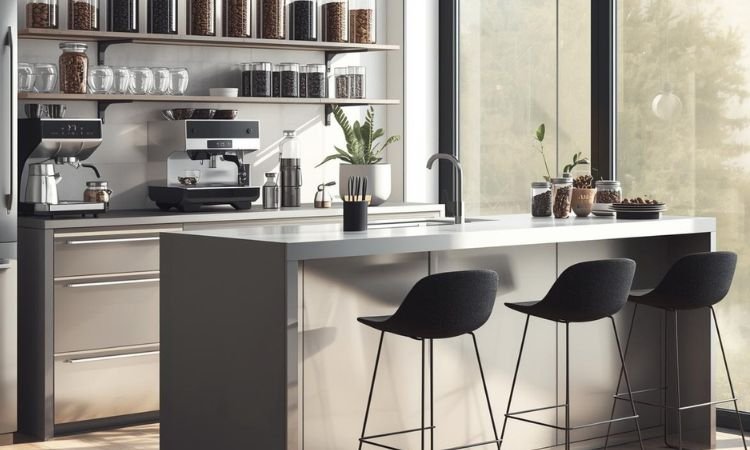
A coffee bar only works well if the surface holds up to heat, spills, and daily use—without looking worn or messy.
In this guide, you’ll find 10 practical countertop ideas for coffee stations, covering durable materials, smart layouts, easy-clean finishes, and space-saving designs that fit small kitchens, built-ins, or standalone carts.
The right countertop keeps your setup functional, tidy, and visually clean—no matter how many cups you brew.
Why Your Coffee Bar Surface Matters
Heat and moisture resistance: Steam wands, hot kettles, and wet portafilters demand surfaces that won’t warp, stain, or crack.
Easy maintenance: A coffee bar gets splashed daily. Non-porous, wipeable materials save time and keep things looking fresh.
Visual simplicity: The countertop sets the tone. A clean, uncluttered surface makes the whole station feel more intentional.
Space efficiency: Even narrow countertops (12–18 inches deep) can work if the material and layout support your routine.
10 Coffee Bar Countertop Ideas That Balance Style and Daily Use
These options focus on real-world performance—not just appearance.
1. Matte-Finish Quartz Slab
Quartz resists heat, stains, and scratches without sealing. A matte finish hides water spots and fingerprints better than polished stone. Choose soft whites, warm grays, or concrete-look tones for a neutral backdrop.
Install with a tight backsplash or integrated splash guard to protect walls from splatter. This works well in built-in cabinets or full-height coffee nooks.
2. Stainless Steel Worktop
Commercial-grade stainless steel handles high heat, steam, and constant wiping. It’s non-porous, hygienic, and ages evenly. Use a brushed finish to reduce glare and fingerprint visibility.
Pair with matching appliances for a streamlined look. Ideal for undercounter units or modern utility carts where durability comes first.
3. Sealed Concrete Overlay
A thin concrete layer over plywood or existing cabinetry offers an industrial look with custom color and texture. Seal it with a food-safe penetrating sealer to prevent staining from coffee oils or syrups.
Keep edges slightly rounded for comfort. Best in dry areas—avoid if your machine produces heavy condensation without ventilation.
4. Butcher Block with Mineral Oil Finish
Solid wood adds warmth and absorbs minor impacts. Use hard maple or walnut with a regular mineral oil treatment to repel moisture. Keep hot items on trivets to avoid scorching.
Wipe spills immediately and re-oil monthly. This suits open-shelf setups or farmhouse-style kitchens where natural materials fit the aesthetic.
5. Large-Format Porcelain Slab
Porcelain slabs mimic marble or stone but resist heat, UV fading, and etching. They’re thinner than stone but just as tough. Choose light, veined patterns for visual interest without busyness.
Install with minimal seams for a seamless look. Works well on floating shelves or narrow peninsula extensions dedicated to coffee prep.
6. Solid Surface (Corian-Style)
Non-porous acrylic solid surface can be thermoformed into seamless curves and integrated backsplashes. Scratches can be sanded out, and it handles moderate heat well.
Pick matte or soft-sheen finishes in neutral tones. Great for custom built-ins where you want hidden seams and a monolithic appearance.
7. Laminate with Integrated Edge
Modern high-pressure laminate comes in realistic stone, concrete, and wood prints. Choose a post-formed edge (where the front and top are one piece) to eliminate seams where liquid collects.
Affordable and easy to replace. Use in rental units, utility carts, or temporary setups where budget matters more than longevity.
8. Epoxy-Coated Plywood Top
For DIY carts or shelves, coat marine-grade plywood with clear, food-safe epoxy. The result is glass-smooth, waterproof, and highly durable. Tint the epoxy slightly for a custom look.
Allow full curing time (72+ hours) before use. Avoid direct contact with boiling water—use trivets for kettles. Best for low-moisture brewing methods like pour-over or drip.
9. Recycled Glass Composite
Made from crushed glass in a resin base, this material offers speckled texture and high durability. It’s heat-resistant and non-porous when properly sealed.
Choose lighter bases with subtle glass flecks to keep the surface from feeling busy. Works well in eco-conscious homes or modern minimalist setups.
10. Tile with Minimal Grout Lines
Use large-format (12×24” or bigger) porcelain tiles with rectified edges and narrow grout lines (1/16”). Pick a through-body color so chips aren’t obvious. Seal grout with a penetrating sealer.
Avoid small tiles—they create too many grooves for coffee grounds to collect. Best for permanent installations where you can control the substrate and slope for drainage.
Common Countertop Mistakes and Fixes
Using unsealed natural stone
Fix: Skip marble or limestone unless you’re willing to seal it monthly. Opt for quartz or porcelain instead.
Ignoring heat protection
Fix: Always use trivets or silicone mats under hot kettles and steam wands—even on “heat-resistant” surfaces.
Choosing high-gloss finishes
Fix: Glossy surfaces show every water spot and fingerprint. Go matte or satin for lower maintenance.
Overlooking backsplash integration
Fix: Extend the countertop material up the wall 4–6 inches, or use matching tile, to simplify cleanup behind the machine.
Frequently Asked Questions
How deep should a coffee bar countertop be?
Minimum 12 inches for a machine and mug. 16–18 inches gives room for a grinder and workspace. Anything deeper may feel bulky in narrow zones.
Can I use the same countertop as my main kitchen?
Yes—if it’s durable enough. But if your kitchen uses delicate materials (like honed marble), consider a tougher surface just for the coffee zone.
What’s the easiest to clean?
Stainless steel, quartz, and solid surface rank highest. They require only a damp cloth and mild soap—no special cleaners.
Do I need an overhang?
Not necessary. A flush front works fine since you’re not sitting at the coffee bar. Save the overhang for eating counters.
Build a Surface That Lasts
Your coffee bar countertop should handle daily use without constant upkeep. Prioritize durability, ease of cleaning, and a simple look that doesn’t compete with your gear.
The best choice isn’t always the most expensive—it’s the one that stays clean, functional, and calm-looking day after day.
Which of these 10 options fits your space and routine? Start with the surface, and the rest will fall into place.