Choosing the right staircase railing design transforms a purely functional safety feature into a defining architectural element. The balustrade you select shapes how light moves through your home, how guests perceive each level, and how seamlessly your staircase connects with the surrounding interior. This collection of twenty inspiring ideas covers every major style and material.
From minimalist cable systems to ornate wrought iron, the perfect staircase railing design balances safety requirements with visual impact. Whether you are renovating a compact urban townhouse or building a spacious country estate, these pins showcase options that suit diverse budgets and aesthetics. Use this guide to narrow your favorites before consulting a fabricator or contractor.
Essential Elements of a Successful Staircase Railing Design
Review these foundational considerations before you commit to any style.
- Match the Architecture: Align the railing style with your home’s era and structural character.
- Prioritize Safety Codes: Confirm local height, spacing, and load requirements before ordering materials.
- Consider Maintenance: Weigh long-term upkeep for wood, metal, glass, and cable systems.
- Think About Lighting: Choose finishes that complement natural and artificial light throughout the day.
- Balance Open and Solid: Decide how much visual transparency your staircase railing design should offer.
- Coordinate With Flooring: Harmonize wood tones and metal finishes with nearby floors and trim.
- Plan for Children and Pets: Reduce climbable elements and unsafe gaps in high-traffic homes.
- Set a Realistic Budget: Account for materials, fabrication, installation, and finishing costs.
1. Modern Cable Railing for Open Concept Homes
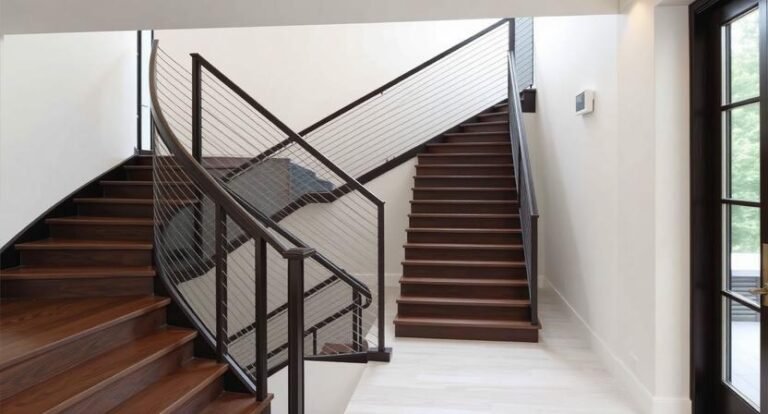
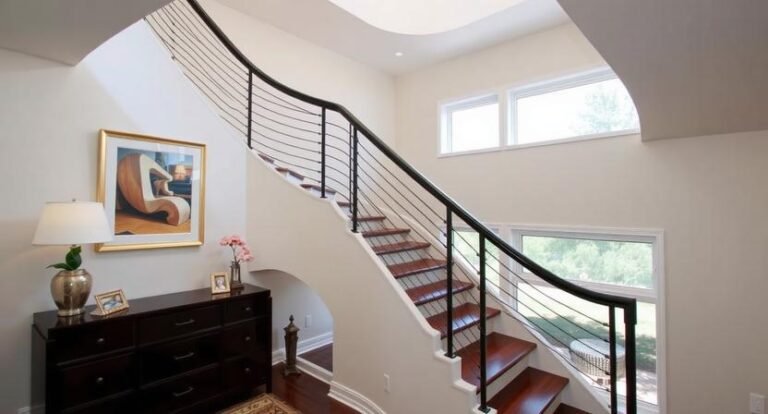
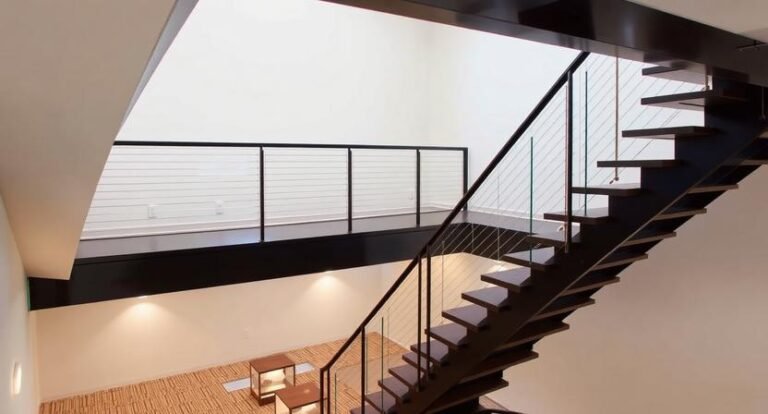
Imagine a staircase railing design that nearly disappears, leaving only thin horizontal lines against a bright, open backdrop. Stainless steel cables paired with slim posts create this effect, allowing sightlines to flow uninterrupted from one floor to the next. Homeowners with contemporary or industrial interiors often choose this option for its clean geometry.
This staircase railing design also works well in smaller homes where visual clutter must be minimized. The tensioned cables reflect light subtly, adding a quiet shimmer without overwhelming the space.
2. Classic Wood Balusters With Rich Stain
Picture warm oak or mahogany turned balusters rising beside a matching handrail, a staircase railing design that feels timeless in traditional homes. Deep stains bring out natural grain patterns, while the repetitive rhythm of vertical spindles creates a comforting sense of order. This look pairs beautifully with hardwood floors and paneled walls.
A wood staircase railing design like this adapts well to colonial, craftsman, and farmhouse interiors. Regular polishing keeps the finish glowing for decades.
3. Wrought Iron Scrollwork for Old World Charm
Discover how hand-forged scrollwork turns a simple staircase into a sculptural focal point. This ornate staircase railing design draws on European traditions, with curling motifs and decorative flourishes that catch the eye from every angle. Dark powder-coated finishes resist rust while preserving the intricate detailing that defines the style.
Homes with high ceilings and grand entryways suit this staircase railing design especially well. The ironwork adds visual weight that balances expansive vertical spaces.
4. Glass Panel Railings for Contemporary Elegance
Consider frameless tempered glass panels that seem to float beside each tread, a staircase railing design favored in luxury modern residences. The transparent surface preserves open sightlines while still meeting safety standards when properly engineered and installed. Reflections from windows and lighting add depth without adding visual bulk.
This staircase railing design shines in coastal homes and penthouses where unobstructed views matter most. Smudge-resistant coatings keep the glass looking pristine.
5. Industrial Pipe Railings With Urban Edge
Anchor a loft or converted warehouse with black steel pipes and exposed fittings, a staircase railing design that celebrates raw materials. The threaded joints and matte finish evoke factory architecture, giving the staircase a rugged, purposeful character. Paired with reclaimed wood treads, the effect feels both historic and current.
An industrial staircase railing design also suits basement stairs and garage conversions. Its sturdy construction handles heavy daily use without showing wear.
6. Two-Tone Metal and Wood Combinations
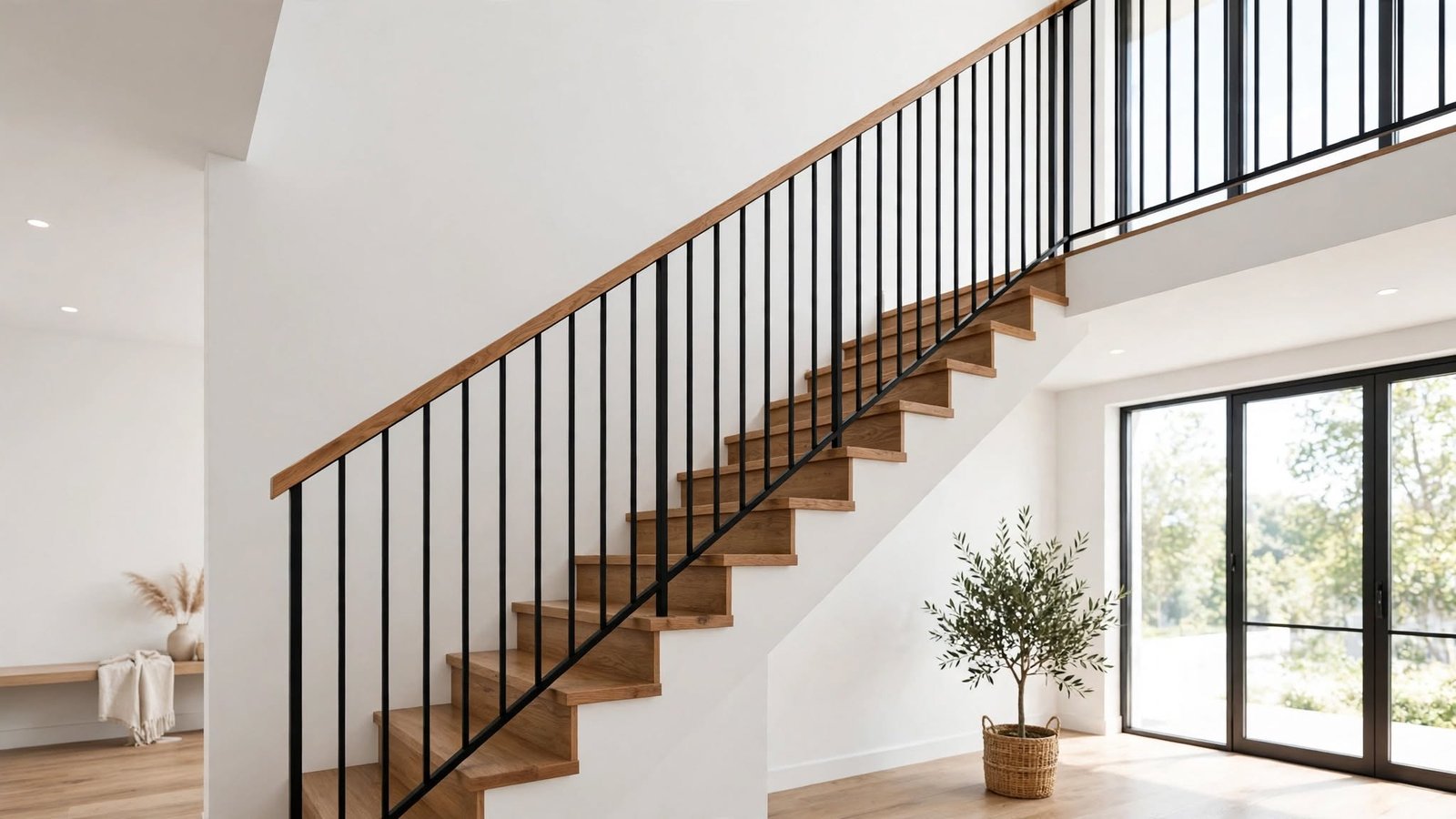
Layer contrasting materials by pairing a warm wood handrail with slender metal balusters, a staircase railing design that bridges rustic and modern tastes. The wood cap softens the coolness of steel or aluminum, while the metal spindles keep the overall look light and airy. This hybrid approach works in nearly any interior style.
Designers often recommend this staircase railing design for transitional homes. It coordinates easily with mixed-material furniture and fixtures throughout the house.
7. Minimalist Horizontal Bar Railings
Build a sleek geometric statement with evenly spaced horizontal bars, a staircase railing design that emphasizes clean lines over ornamentation. Matte black or brushed steel finishes give the bars a crisp, architectural presence that complements modern furniture and artwork. The repetition of parallel lines creates a calming visual rhythm.
This staircase railing design suits mid-century and Scandinavian interiors particularly well. It also pairs nicely with concrete or stone stair treads.
8. Curved Handrails for Sweeping Staircases
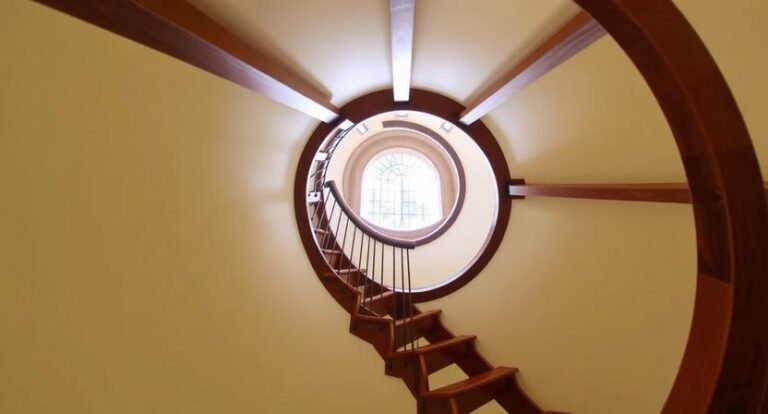
Bring graceful movement to a spiral or curved staircase with a continuous bent handrail, a staircase railing design that guides the eye smoothly from bottom to top. Steam-bent wood or custom-fabricated metal follows the stair’s arc without awkward joints. The result feels fluid and sculptural rather than rigid.
Grand foyers and curved landings benefit most from this staircase railing design. Skilled craftspeople are essential for achieving a seamless curve.
9. Farmhouse Style With Chunky Newel Posts
Transform a plain staircase with oversized square newel posts and simple rectangular balusters, a staircase railing design rooted in rural American traditions. Painted white or distressed finishes enhance the cozy, lived-in feel that farmhouse interiors celebrate. A thick handrail adds substance and warmth under the palm.
This staircase railing design pairs beautifully with shiplap walls and wide-plank floors. It also stands up well to busy family life.
10. Black and White High Contrast Railings
Frame a dramatic focal point by combining dark balusters with a white handrail, a staircase railing design that plays with bold contrast. The interplay of black and white sharpens the staircase’s silhouette against surrounding walls, making every step feel intentional. This approach works especially well in spaces with neutral color palettes.
Interior designers often use this staircase railing design to add graphic impact without introducing new colors. It suits both classic and contemporary homes.
11. Rustic Reclaimed Wood Railings
Explore the character of barn wood and weathered beams repurposed into a staircase railing design full of texture and history. Knots, nail holes, and uneven edges tell a story that new lumber simply cannot replicate. Paired with iron accents, the railing feels grounded in craftsmanship and sustainability.
Cabins, mountain homes, and rustic lofts showcase this staircase railing design beautifully. Sealing the wood protects it while preserving its aged appearance.
12. Art Deco Geometric Metal Patterns
Shape a glamorous statement with repeating geometric motifs in brass or bronze, a staircase railing design inspired by 1920s luxury. Chevrons, fans, and stepped forms catch light in ways that make the staircase feel jewel-like. The metallic finish adds warmth and sophistication to formal interiors.
This staircase railing design suits boutique hotels and elegant townhouses alike. Polished finishes require occasional cleaning to maintain their shine.
13. Coastal Style With White and Rope Details
Define a breezy seaside mood with white-painted balusters and subtle nautical touches, a staircase railing design that recalls beachside cottages. Rope-wrapped handrails or cleat-inspired brackets add playful maritime references without overwhelming the space. Light, airy colors keep the staircase feeling bright and welcoming.
Vacation homes and coastal retreats embrace this staircase railing design wholeheartedly. It also works in any home that craves a relaxed, sunny atmosphere.
14. Mid-Century Modern Angled Railings
Introduce clean diagonal lines and tapered profiles reminiscent of 1950s design, a staircase railing design that feels both retro and remarkably current. Walnut handrails and thin vertical spindles capture the era’s optimistic geometry. The look complements open floor plans and large windows.
Fans of mid-century furniture appreciate how this staircase railing design ties a room together. It pairs especially well with terrazzo and cork flooring.
15. Suspended Cable and Rod Systems
Suspend thin rods or cables from ceiling anchors to create a floating staircase railing design that defies gravity. This engineering-forward approach removes traditional posts entirely, leaving an uninterrupted visual field. Tension and precise installation are critical to both safety and aesthetics.
Architects favor this staircase railing design in double-height spaces and galleries. It emphasizes verticality while keeping the stair itself the star.
16. Bold Colored Railings as Accent Features
Ground a neutral interior with a saturated pop of color, a staircase railing design that turns the balustrade into an intentional accent. Deep navy, emerald green, or mustard yellow handrails draw the eye and add personality without requiring major renovation. The color can echo artwork or upholstery elsewhere in the room.
Creative homeowners love this staircase railing design for its affordability and impact. Repainting an existing railing is one of the easiest upgrades available.
17. Traditional Spindle and Handrail Proportions
Position classic turned spindles at traditional spacing to achieve a staircase railing design that feels balanced and familiar. Proper proportions between the handrail height, spindle width, and newel post size create harmony that the eye instinctively appreciates. This approach works in nearly every residential setting.
Builders and renovators rely on this staircase railing design because it satisfies code requirements while remaining visually pleasing. It is a safe choice for resale value.
18. Laser-Cut Panel Railings With Custom Patterns
Fill the space between handrail and tread with intricate laser-cut panels, a staircase railing design that blends privacy with artistry. Custom patterns can reference nature, geometry, or family initials, making each staircase unique. Powder-coated steel or aluminum keeps the panels durable and lightweight.
This staircase railing design appeals to homeowners who want something truly one-of-a-kind. It works especially well in contemporary and transitional interiors.
19. Mixed Height Railings for Split-Level Homes
Place railings at varying heights to accommodate split-level transitions, a staircase railing design that solves complex spatial challenges elegantly. Stepped handrails follow the change in floor levels while maintaining a continuous visual line. Careful detailing ensures each section meets safety codes independently.
Split-level and bi-level homes benefit enormously from this staircase railing design. It turns an awkward layout into a deliberate architectural feature.
20. Outdoor Staircase Railings Built for Weather
Craft a durable exterior staircase railing design using powder-coated aluminum, stainless steel, or weather-treated hardwood. These materials resist moisture, UV damage, and temperature swings while maintaining their appearance season after season. Textured finishes improve grip on wet days and reduce glare.
Decks, garden paths, and poolside steps all benefit from a well-specified outdoor staircase railing design. Proper anchoring to concrete or masonry ensures long-term stability.
Frequently Asked Questions
Q. What is the most popular staircase railing design for modern homes?
Ans. Cable and glass systems dominate modern staircase railing design because they preserve open sightlines.
Q. How do I choose materials for a staircase railing design?
Ans. Match the staircase railing design to your interior style, maintenance tolerance, and local building codes.
Q. Can I update my staircase railing design without replacing everything?
Ans. Yes, repainting balusters or swapping just the handrail refreshes a staircase railing design affordably.
Conclusion
Selecting the right staircase railing design is a decision that blends safety, style, and long-term value. The twenty ideas above span every major material and aesthetic, from industrial pipes to laser-cut panels, giving you a strong starting point for your own project.
Before finalizing any staircase railing design, verify local code requirements and consult a qualified fabricator. With the right choices, your staircase will become one of the most admired features in your home for years to come.