Kitchen clutter surveys show 73% of homeowners cite small appliances as primary countertop clutter source with average kitchens housing 8-12 appliances yet using only 3-4 regularly, creating the visual chaos and limited workspace that makes meal preparation frustrating. The organization failures happen when storing frequently-used appliances in inaccessible locations forcing them back onto counters within days or keeping rarely-used gadgets occupying prime real estate indefinitely.
Kitchen appliances organization ideas reveal which storage strategies maintain clear counters without sacrificing convenience versus solutions that sound practical but fail through actual daily use. The best approaches balance accessibility with concealment creating kitchens that feel spacious and organized while keeping essential appliances within easy reach rather than requiring cabinet excavation before each use.
We’re covering 10 kitchen appliances organization ideas featuring systems that work with real cooking routines. These practical strategies maintain both clear surfaces and genuine functionality providing the organized appearance and cooking efficiency that makes kitchen appliance storage successful long-term.
Key points we’re exploring:
- Storage solutions balancing accessibility with concealment
- Frequency-based organization determining placement
- Space-maximizing strategies for compact kitchens
- Appliance garage and cabinet modifications
- Vertical storage utilizing wall and cabinet space
- Decision frameworks for keeping versus donating appliances
Essential Qualities of Kitchen Appliances Organization
Use-Frequency Determines Optimal Storage Location: Daily appliances—coffee maker, toaster—deserve counter space or pull-out shelves allowing one-motion access while weekly-use items belong in nearby base cabinets and occasional gadgets can occupy upper cabinets or pantry locations reducing retrieval friction proportional to usage frequency. It’s like tool organization where proximity reflects necessity. The frequency-based placement prevents the two-step access barrier that forces appliances back onto counters within weeks despite organizational intentions.
Adequate Clearance Allows Actual Operation: Storage solutions must accommodate appliances during use not just storage—pull-out shelves needing 18-24 inches clearance when extended, appliance garages requiring open door space, lift mechanisms needing vertical clearance—as cramped solutions forcing removal to counters before each use defeat organizational purpose. It’s like parking spaces where dimensions determine usability. The operational planning ensures stored appliances remain genuinely functional rather than requiring workspace transfer.
Dedicated Zones Prevent Cabinet Chaos: Grouping related appliances—baking equipment together, coffee station supplies unified, breakfast items centralized—creates intentional zones where logical searching happens rather than scattered placement requiring hunting through multiple cabinets locating bread machine or waffle iron. It’s like grocery store aisles where organization enables finding. The zoned approach maintains order through intuitive placement.
Realistic Assessment Prevents Guilt Storage: Keeping appliances from guilt, gifts, or aspirational cooking creates cabinet crowding that buries actually-used items while devices gathering dust for 6+ months without use deserve donation regardless of original cost freeing space for functional organization. It’s like closet editing where honesty enables function. The ruthless evaluation eliminates the clutter masquerading as organization when unused gadgets consume valuable storage.
10 Kitchen Appliances Organization Ideas
Create clear functional kitchens with these kitchen appliances organization ideas featuring storage that maintains both order and accessibility.
Pull-Out Appliance Shelf
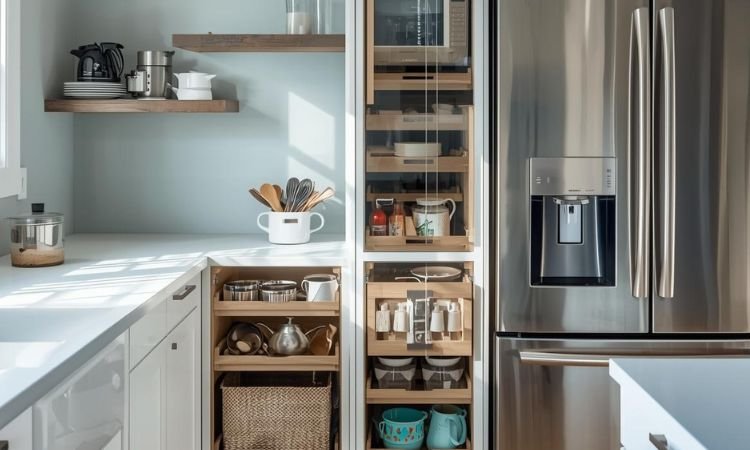
Install heavy-duty pull-out shelving in base cabinets storing mixers, food processors, or blenders. The sliding mechanism brings appliances forward for use without lifting or removal while pushing back conceals when finished. It’s like file drawers where access doesn’t require excavation.
Choose slides rated for 50-100 pound capacity supporting appliance weight plus ingredients. Include electrical outlet inside cabinet eliminating cord issues. Costs run $80-$200 per quality pull-out installed. This kitchen appliances organization maintains accessibility while clearing counters.
Appliance Garage with Tambour Door
Build appliance garages in corner cabinets with roll-up tambour doors concealing coffee makers, toasters, or blenders. The specialized cabinet with electrical outlets and pull-out tray keeps appliances plugged in and ready while doors hide clutter. It’s like parking garages where dedicated space contains specific items.
Position at comfortable working height—typically counter level. Include task lighting inside garage. Expect costs $300-$600 for custom appliance garage installation. This kitchen appliances organization provides dedicated concealed workspace for daily-use items.
Lower Cabinet Deep Drawers
Convert base cabinets to deep drawers measuring 10-14 inches high accommodating stand mixers, slow cookers, or rice cookers stored upright. The drawer access prevents reaching into dark cabinets while full extension slides reveal entire contents. It’s like filing systems where visibility improves organization.
Line drawers with non-slip mats preventing appliance shifting. Organize by appliance height maximizing space. Costs range $150-$350 per deep drawer conversion. This kitchen appliances organization improves access while maintaining concealment.
Vertical Tray Dividers
Install vertical dividers in cabinets storing flat appliances—panini press, electric griddle, warming trays—on edge like files. The upright storage uses vertical space efficiently while allowing single-item removal without disturbing others. It’s like magazine racks where vertical orientation multiplies capacity.
Space dividers 2-3 inches apart accommodating typical appliance thickness. Mount in base or tall pantry cabinets. Expect costs $30-$80 for quality divider systems. This kitchen appliances organization maximizes awkward flat-item storage.
Open Lower Shelf Station
Designate open lower cabinet shelf as appliance station removing doors for easy access to daily items. The doorless design eliminates opening barrier while lower placement keeps appliances accessible without counter occupation. It’s like display storage where visibility equals accessibility.
Use attractive appliances as this storage remains visible. Include basket or tray containing related supplies. Costs nothing if using existing cabinet. This kitchen appliances organization suits minimalist aesthetics valuing convenience.
Corner Cabinet Lazy Susan
Install lazy susan turntables in corner cabinets organizing small appliances and attachments. The rotating mechanism brings back-corner items forward without reaching while maximizing difficult corner space. It’s like carousels where rotation improves access.
Choose heavy-duty lazy susans supporting appliance weight. Group related items together on turntable sections. Expect costs $40-$100 for quality lazy susan. This kitchen appliances organization solves corner cabinet access problems.
Appliance Lift Mechanism
Mount appliance lift systems in base cabinets bringing mixers or processors to counter height with single motion. The spring-loaded or electric lift stores appliances below counter while raising to working height when needed. It’s like pop-up outlets where mechanism provides convenience.
Choose lifts rated for specific appliance weight. Include electrical outlet at lift platform. Costs run $300-$600 for quality lift mechanism installed. This kitchen appliances organization provides ultimate accessibility for heavy frequently-used appliances.
Pantry Appliance Closet
Dedicate pantry section to appliance storage with adjustable shelving accommodating varied heights. The walk-in or reach-in pantry provides generous space for occasional-use items without consuming prime kitchen cabinets. It’s like storage rooms where less-frequent items migrate outward.
Include step stool if using upper shelves for heavy items. Label shelves or use baskets organizing attachments with appliances. Costs minimal using existing pantry space. This kitchen appliances organization centralizes seasonal and specialty equipment.
Wall-Mounted Coffee Station
Create wall-mounted floating shelves or cabinet specifically for coffee maker and supplies. The dedicated station with convenient electrical outlet keeps coffee equipment accessible and organized while defining specific purpose. It’s like beverage bars where specialization creates efficiency.
Include hooks for mugs and small drawer or basket for pods or beans. Position near sink for water access. Expect costs $80-$200 for mounted shelving and organization. This kitchen appliances organization creates functional coffee zone.
Overhead Pot Rack Adaptation
Repurpose overhead pot racks hanging lightweight appliances—hand mixers, immersion blenders, electric kettles—on hooks. The suspended storage frees cabinet space while keeping items visible and accessible. It’s like pegboards where vertical space becomes storage.
Verify rack weight capacity before hanging appliances. Use in kitchens with adequate ceiling height preventing head bumping. Costs add minimal expense to existing rack. This kitchen appliances organization uses often-wasted vertical space creatively.
Implementing Appliance Organization Systems
Audit Current Appliance Collection: Remove all appliances assessing each item’s actual use frequency over past 6 months—daily, weekly, monthly, rarely, never—before determining appropriate storage location or donation. It’s like inventory where honest accounting reveals reality. The assessment prevents organizing clutter rather than eliminating unnecessary items.
Measure Before Installing Solutions: Verify appliance dimensions plus operational clearance required ensuring storage solutions actually accommodate specific items rather than assuming standard sizes fitting all situations. It’s like tailoring where measurements determine fit. The dimensional verification prevents expensive storage modifications that don’t actually work.
Install Adequate Electrical Outlets: Add outlets inside cabinets, appliance garages, or pull-out shelves allowing appliances remaining plugged in rather than constant unplugging creating cord clutter and plug wear. It’s like infrastructure where electrical access enables storage success. The outlet investment dramatically improves convenience.
Group Related Accessories Together: Store food processor blades with processor, mixer attachments with mixer, blender cups with base preventing the separated storage that causes searching multiple locations assembling complete appliance. It’s like keeping shoes with outfits where completeness prevents frustration. The unified storage maintains readiness.
Frequently Asked Questions About Kitchen Appliances Organization
How Many Appliances Should Stay on Counters?
Limit counter appliances to 2-4 items used daily—typically coffee maker, toaster or kettle, and possibly stand mixer if baking frequently. Everything else belongs in cabinets regardless of use frequency. The minimal counter presence creates workspace and visual calm.
Counter space represents premium kitchen real estate. The selective display preserves functionality while maintaining organized appearance.
What Do You Do With Rarely-Used Appliances?
Items used less than 4-5 times annually belong in basement, garage, or attic storage rather than consuming valuable kitchen space. Seasonal appliances can rotate—ice cream maker in summer, hot chocolate maker in winter. Appliances unused over 12 months deserve donation or sale.
Kitchen storage should reflect actual cooking patterns not aspirational ones. The honest assessment frees space for functional organization.
How Do You Organize Small Appliance Cords?
Use velcro ties, twist ties, or cord wraps keeping cords contained during storage. Avoid tight rubber bands damaging cord insulation over time. Store appliances with cords wrapped preventing tangling. Consider installing outlets in storage locations eliminating unplugging needs.
Cord management prevents the tangled chaos making appliance retrieval frustrating. The simple organization maintains order long-term.
What About Appliance Manuals and Warranties?
Create kitchen binder or drawer organizing all appliance manuals, warranties, and receipts alphabetically or by appliance type. Alternatively, scan documents storing digitally while discarding paper. Keep warranty information accessible for returns or service needs.
Centralized document storage prevents searching when manuals become necessary. The organized approach maintains important information without clutter.
Should You Store Appliances in Original Boxes?
No—original boxes consume excessive space while providing minimal protection versus cabinet storage. Use cabinets directly storing appliances or transfer to space-efficient storage bins if boxing necessary. Save boxes only for appliances requiring shipping for repairs or seasonal storage.
Bulky packaging prevents functional organization. The direct storage or right-sized containers maximizes available space.
Creating Your Organized Appliance System
Kitchen appliances organization ideas reveal that frequency-based placement combined with realistic collection editing creates lasting solutions while attempting to organize too many appliances in prime locations fails inevitably. The honest assessment of actual use patterns followed by strategic storage matching access needs to usage reality maintains both clear counters and cooking efficiency. The balanced approach creates organized kitchens that function smoothly rather than requiring constant reorganization.
Start by removing and evaluating every appliance honestly assessing actual use over past 6-12 months. Donate items gathering dust while identifying daily versus occasional-use equipment. Match storage solutions to usage frequency—most accessible locations for daily items, convenient storage for weekly use, remote storage for occasional equipment. The thoughtful system creates lasting organization that enhances rather than hinders cooking.
What appliance clutter frustrates your kitchen most? Share your organization challenges below!