Floral wallpaper is gorgeous but expensive, and those peel-and-stick versions never quite lay flat, right? But here’s what most people don’t consider—painted flowers. Not those amateur attempts that look like kindergarten art, but actual hand-painted botanicals that add charm without the commitment or cost of wallpaper. And the best part? Imperfect brushstrokes actually add to the appeal.
Floral wall painting ideas create custom botanical art scaled perfectly for your space and style. The hand-painted approach delivers personality that mass-produced wallpaper can’t match while letting you control colors, size, and placement exactly. It’s getting that garden-inspired look without installers or thousands in wallpaper costs.
We’re covering 8 floral wall painting ideas ranging from simple to statement-making. Whether you’re confident with a paintbrush or barely artistic, these approaches work at different skill levels. And honestly? The organic imperfection of hand-painted flowers beats too-perfect wallpaper patterns every time.
What Makes Floral Wall Painting Work
- Scale Matters Enormously: Tiny flowers disappear while oversized blooms create drama and impact. It’s going bigger and bolder than feels comfortable. The large-scale approach reads clearly from across the room instead of looking busy up close.
- Limited Colors Feel Sophisticated: Using 2-4 colors maximum creates cohesion instead of chaotic gardens. It’s restraint that makes spaces feel designed. The edited palette prevents floral walls from overwhelming rooms.
- Placement Creates Balance: Strategic flower placement guides eyes and balances room proportions. It’s thinking about composition beyond just filling space. The thoughtful arrangement makes walls feel intentional rather than randomly decorated.
- Imperfection Adds Character: Visible brushstrokes and organic shapes look more authentic than mechanical precision. It’s embracing the handmade quality that gives painted florals their charm. The artistic looseness prevents walls from looking like failed attempts at realism.
8 Floral Wall Painting Ideas
Transform your walls with these floral wall painting ideas that add botanical beauty through hand-painted artistry.
Paint Oversized Single Blooms
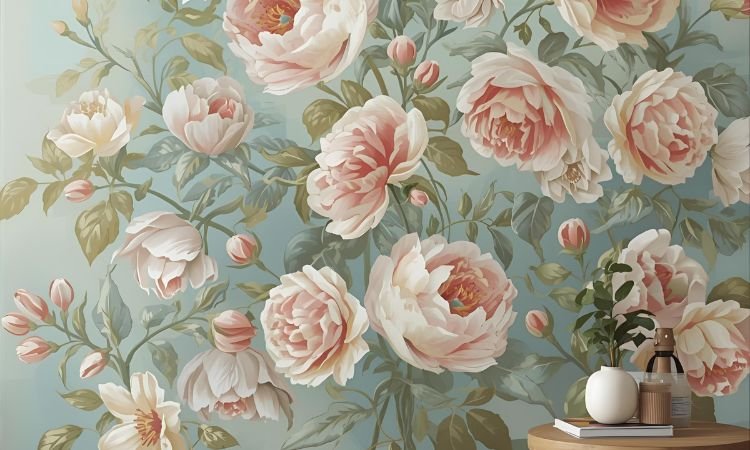
Create 2-3 giant flower heads—peonies, poppies, or dahlias—in one corner or scattered across a wall. The dramatic scale makes simple shapes feel artistic. It’s editorial botanical illustration energy without needing actual illustration skills.
Use a projector tracing basic shapes then fill with paint in limited colors. Keep backgrounds light letting flowers pop. This floral wall painting idea costs minimal paint but requires some artistic confidence creating stunning focal points.
Add a Climbing Vine Border
Paint delicate vines with small leaves and flowers climbing from baseboards up corners or around doorways. The organic growth pattern feels natural and romantic. It’s adding botanical detail to architectural features.
Use thin brushes creating trailing stems and leaves in one or two colors. Work slowly building the vine gradually. This floral wall painting idea frames rooms beautifully and works even in small doses around just one doorway.
Create a Watercolor Wash Floral
Apply loose watercolor-style flowers using diluted paint in soft washes. The dreamy effect adds color without hard edges or precise details. It’s impressionistic florals that feel artistic and ethereal.
Work on damp painted walls blending colors while wet creating soft transitions. Suggest flower shapes rather than detailing petals. This floral wall painting idea suits bedrooms and bathrooms creating serene botanical atmospheres.
Paint a Botanical Accent Wall
Cover one wall with scattered flowers and leaves in varying sizes creating an entire garden scene. The immersive approach makes feature walls without wallpaper. It’s custom botanical wallpaper made specifically for your space.
Sketch placement lightly before painting and work from background to foreground layering elements. Mix flower types and sizes preventing repetitive patterns. This floral wall painting idea takes time and planning but creates genuinely unique results.
Add Simple Branch and Blossom Silhouettes
Paint bare branches with small blossoms in single colors creating elegant simplicity. The minimalist approach delivers impact through restraint. It’s cherry blossom or magnolia vibes without complex flower painting.
Use black or deep color branches with blossoms in one contrasting shade. Work from main branches outward adding smaller stems. This floral wall painting idea suits modern and minimalist spaces bringing nature in subtly.
Create a Floral Headboard Design
Paint flowers arching over a bed creating a painted headboard effect. The focal point adds romance and frames the bed beautifully. It’s custom bedroom art that can’t be purchased and costs almost nothing.
Center the design above the bed working symmetrically or asymmetrically depending on style. Use soft colors for restful bedrooms. This floral wall painting idea replaces actual headboards while adding serious personality.
Try Stenciled Floral Patterns
Use large flower stencils creating repeated or scattered botanical patterns. The stencils provide structure while allowing color customization. It’s getting clean flower shapes without freehand painting skills.
Choose oversized stencils avoiding small busy patterns. Layer multiple colors within each flower adding depth. This floral wall painting idea works for people wanting floral walls without artistic confidence delivering polished results.
Paint Abstract Floral Shapes
Create loose gestural flower shapes using bold brushstrokes suggesting blooms without details. The abstract approach feels modern and artistic. It’s floral energy without botanical accuracy.
Use large brushes making confident sweeping strokes in 2-3 colors. Let paint drip slightly adding organic texture. This floral wall painting idea suits contemporary spaces bringing nature in through artistic interpretation rather than realistic rendering.
Making Floral Wall Painting Work
- Test Your Design First: Practice on poster board or prime a section you can repaint if needed. It’s developing confidence and technique before committing. The trial runs prevent expensive mistakes and build painting skills.
- Use Quality Brushes: Decent brushes hold more paint and create smoother strokes making painting easier. It’s investing $20-40 in proper tools versus fighting cheap brushes. The better supplies genuinely improve results for amateurs.
- Work Light to Dark: Build up color gradually adding depth through layers rather than applying everything at once. It’s creating dimension through patience. The layered approach allows adjustments and creates more sophisticated results.
- Step Back Frequently: View your work from across the room checking overall composition instead of fixating on details. It’s maintaining perspective on how everything reads together. The distance viewing prevents over-working areas that look fine from normal viewing distance.
Frequently Asked Questions About Floral Wall Painting
Do You Need to Be Artistic?
Basic painting skills help but realistic rendering isn’t necessary. Loose interpretive florals, stenciled designs, or simple silhouettes work beautifully without advanced technique. The key is confidence in your brushstrokes rather than perfect accuracy.
Start with simple shapes—circles for flower heads, ovals for petals, curved lines for stems. The stylized approach looks intentional rather than unskilled. Practice develops confidence quickly.
What Paint Should You Use?
Regular interior acrylic or latex wall paint works perfectly. Use small sample sizes testing colors before buying quarts. Craft acrylic paint works for detailed areas. Mix regular wall paint with craft paint adjusting consistency and color.
Matte or eggshell finishes blend seamlessly with wall paint. Semi-gloss adds subtle dimension making flowers slightly reflective against flat walls. The mixed sheens create depth through texture.
What Colors Work Best?
Soft neutrals with pops of one accent color create sophisticated looks—think beige backgrounds with dusty pink flowers. Monochromatic schemes using shades of one color feel cohesive. White or cream flowers on colored walls read elegantly.
Avoid using every color—limit to 3-4 maximum including background. The restrained palette prevents busy overwhelming results. Match colors to existing room decor for cohesion.
Can You Paint Over Mistakes?
Absolutely—that’s the beauty of paint. Let mistakes dry completely, prime if needed, and repaint. The forgiving medium allows experimentation and adjustments. Keep extra base wall paint for corrections.
Most “mistakes” look fine from normal viewing distance. Resist the urge to fix everything up close. The imperfections add handmade character.
How Long Does It Take?
Simple designs take 2-4 hours. Complex feature walls require 8-12 hours spread over multiple sessions. Working in stages lets paint dry between layers and prevents fatigue mistakes. The patient approach creates better results than rushing.
Factor drying time into planning. Quick designs work for weekend projects while elaborate walls develop over several weekends.
What Rooms Work for Floral Walls?
Bedrooms, nurseries, bathrooms, and dining rooms all suit floral walls. Living rooms work with restrained designs. Avoid kitchens where grease and moisture cause issues. The softer personal spaces benefit most from botanical themes.
Consider who uses the space—floral designs feel more intimate working best in private areas versus high-traffic public zones.
Should You Hire Someone?
DIY saves hundreds or thousands versus hiring muralists. If you’re genuinely uncomfortable painting, consider compromising—you paint the base and hire someone for complex elements. The hybrid approach controls costs while ensuring quality.
Local art students often paint murals affordably. Community college art departments connect you with emerging artists needing portfolio work. The budget-friendly alternatives deliver custom work without professional muralist rates.
How Do You Maintain Painted Florals?
Touch up scuffs with original paint colors keeping small amounts for repairs. Clean gently with damp cloths avoiding harsh scrubbing. The maintenance matches regular painted walls—minimal and straightforward.
Matte finishes hide imperfections better than glossy surfaces. Accept that some wear adds to the handmade charm. Painted walls age gracefully developing character over time.
Bringing Nature Inside
Floral wall painting ideas prove that botanical beauty doesn’t require expensive wallpaper or professional muralists. The hand-painted approach creates custom designs scaled and colored perfectly for your specific space while celebrating the organic imperfection that makes hand-done work special.
Start with simple designs building confidence before attempting complex compositions. Choose colors complementing your existing decor and work gradually allowing layers to dry between sessions. The patient approach creates walls that feel personal and artistic rather than mass-produced, bringing garden beauty inside through your own creativity.
Which floral approach speaks to you most? I’m curious if you’re brave enough for an entire botanical wall or starting with a simple vine border!